Software

Built by the Experts Who Design the Equipment

Thermal Design Tools

One tool per equipment category, each built around how that equipment actually behaves rather than a generic solver with a different label on it. Every one is written by the same engineers who design, rate and troubleshoot these units in the field.

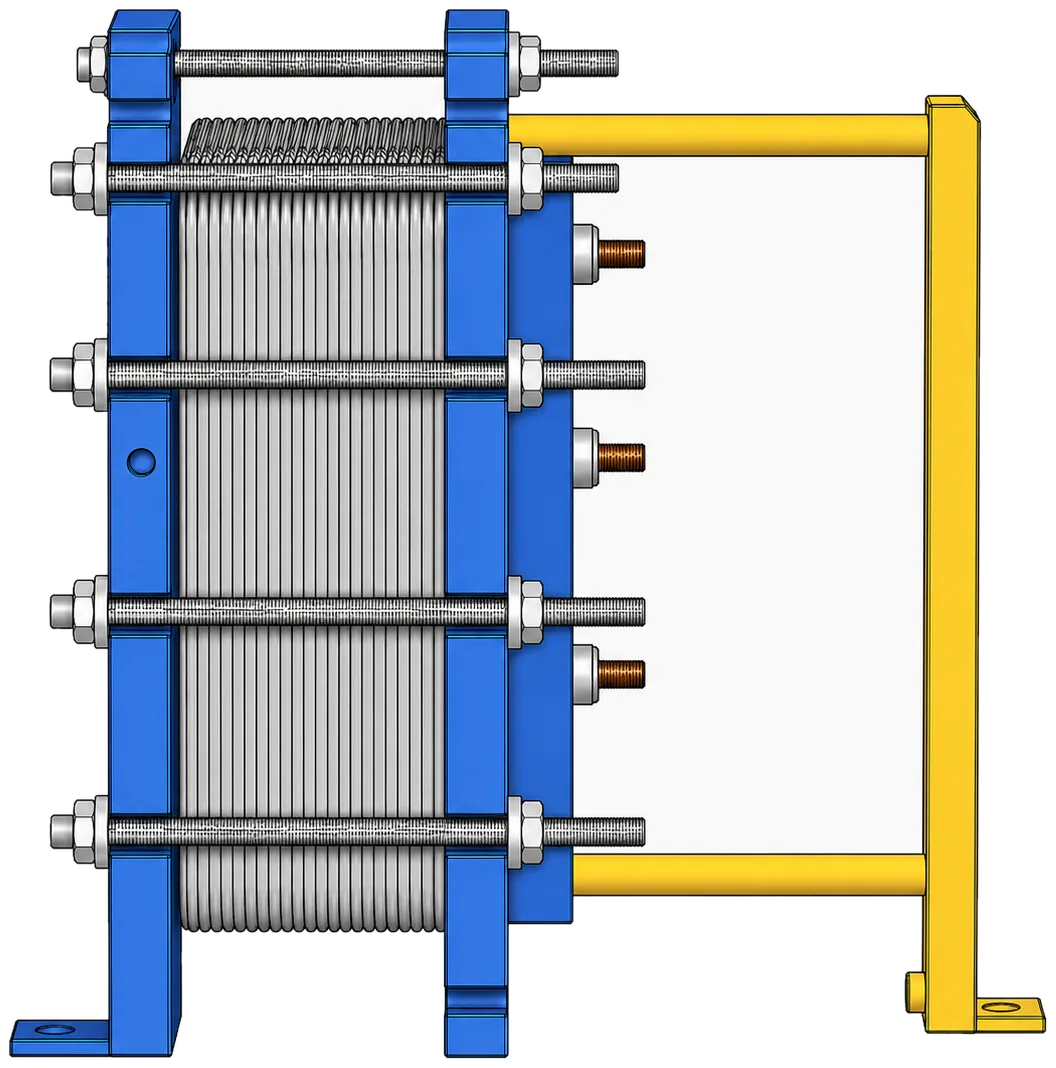
Plate & Frame Heat Exchanger

N-PHEPlate & Frame Heat Exchanger

Plate & Frame Heat Exchangers are the workhorse of process heat transfer — compact, fully serviceable, and efficient across an enormous range of duties, from HVAC and district heating to chemical process cooling. Because the plate pack can be opened, reconfigured, and re-gasketed, they remain the default choice wherever maintainability matters as much as thermal performance.

N-PHE software sizes and rates these units from first-principles thermal-hydraulic calculations, not correlations borrowed from tube or shell exchangers. It calculates plate count, corrugation angle and chevron pattern effects, port sizing, pressure drop on both sides, and overall effectiveness — the same variables a plate manufacturer's own selection software would check, run independently so you're not relying on a vendor's own numbers to validate a vendor's own quote.

The edge is transparency. Every intermediate result — film coefficients, fouling margins, pressure drop breakdown — is visible and exportable, so an engineer can defend the design in a review instead of citing a black-box output. That matters most when a client, auditor, or EPC contractor asks 'how did you get this number,' and the honest answer needs to be more than 'the software said so.'

Typical inputs take under five minutes to enter — hot and cold side flow rates, temperatures, allowable pressure drop, and fluid properties — and the tool returns a complete plate specification along with a full performance summary, ready to hand to a fabricator or attach directly to a design package.
Request a Demo

Brazed Heat Exchanger

N-BZBrazed Heat Exchanger

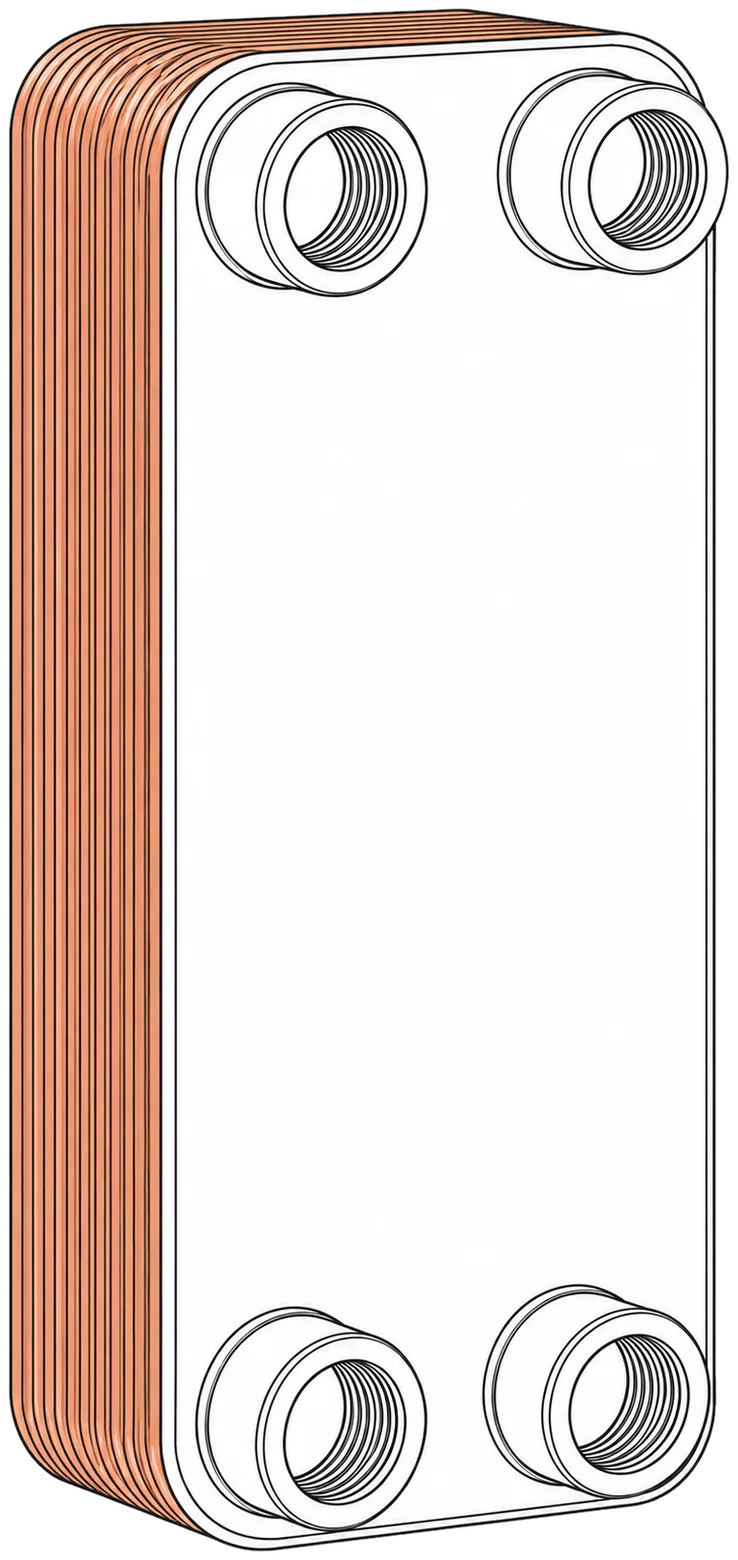
Brazed Heat Exchangers pack plate-style thermal efficiency into a compact, fully sealed, gasket-free unit — the standard choice for refrigeration, heat pump, and HVAC duties where space is tight, leaks aren't an option, and the unit will run largely unattended for years.

N-BZ software handles the sizing math specific to brazed construction: fixed plate counts (since plates can't be added or removed after brazing), braze material compatibility with the process fluid, and the pressure and temperature limits that differ meaningfully from gasketed plate units. It also flags refrigerant-specific considerations — approach temperature, subcooling, and superheat margins — that a generic plate exchanger tool would miss entirely.

The edge: because brazed units can't be field-modified once built, getting the sizing right the first time matters more here than with any serviceable exchanger. Our tool is built around that constraint from the ground up, rather than adapting a plate & frame calculation and hoping the assumptions still hold.

The output includes a full performance rating alongside sizing — approach temperature, subcooling and superheat margins, and pressure drop on both circuits — so you can confirm the unit meets its duty before it's ordered, not after it's installed and underperforming.

Request a Demo

Welded Bloc Heat Exchanger

N-BLOCWelded Bloc Heat Exchanger

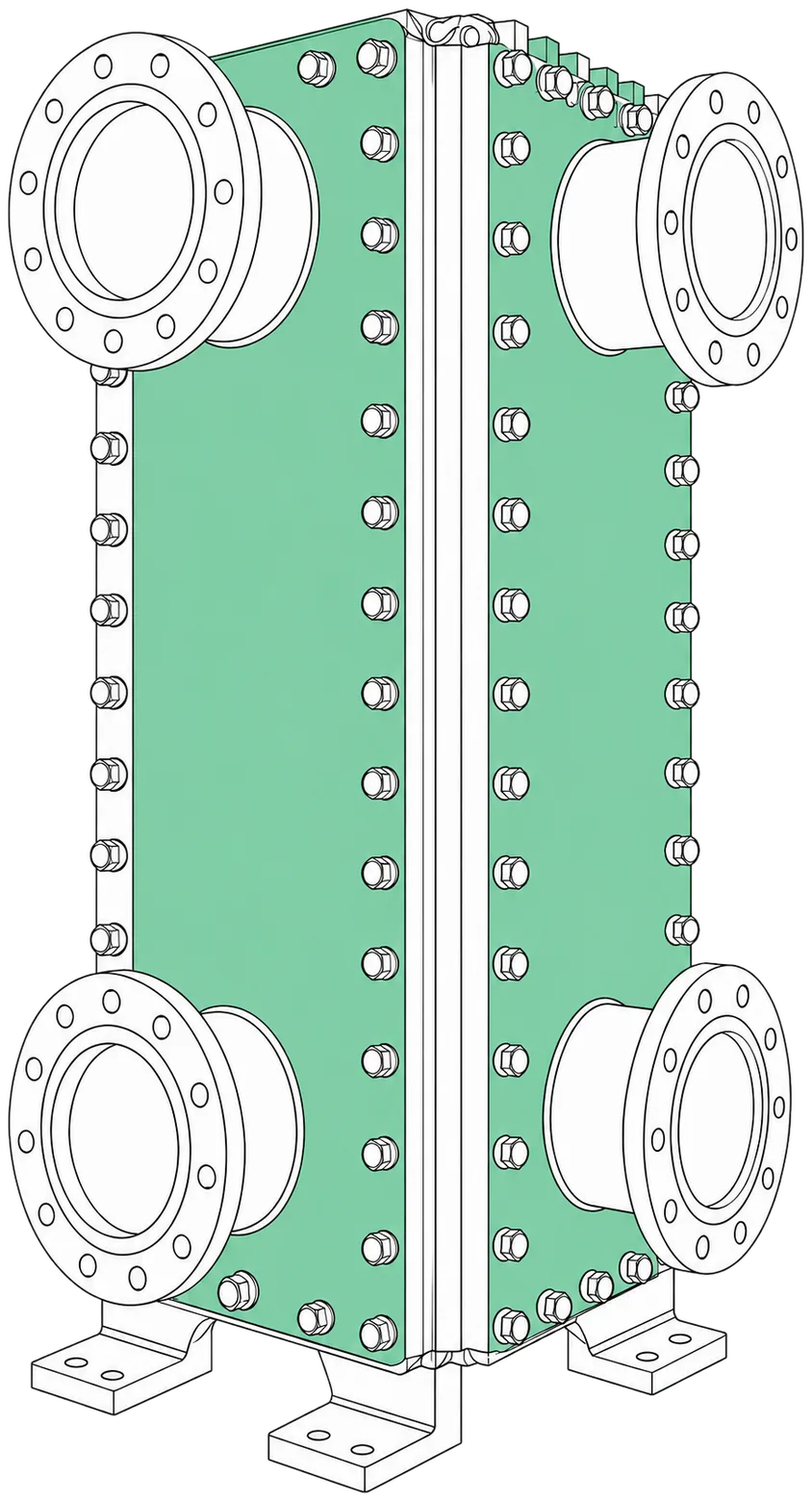
Welded Bloc exchangers trade gasket serviceability for chemical resistance and pressure capability — a fully welded plate pack built for aggressive or high-pressure duties that standard gasketed plate units simply cannot handle safely.

N-BLOC software calculates thermal performance and mechanical limits specific to welded-block construction, including the structural considerations that come with eliminating gaskets entirely — weld joint stress, differential thermal expansion across the block, and pressure containment margins appropriate to fully welded construction rather than gasketed assembly.

The edge: because these units serve the toughest applications — corrosive process fluids, high-pressure services, duties where a gasket failure would be a genuine safety incident — our calculations build in the safety margins that generic plate-exchanger tools don't account for, rather than treating a welded bloc as just a plate exchanger without gaskets.

Output includes material compatibility flags for common corrosive services — acids, chlorides, and other aggressive process fluids — so a design that looks acceptable on thermal performance alone doesn't get flagged later in a materials review after the order is placed.

Request a Demo

Spiral Heat Exchanger Type 1

N-SHE1Spiral Heat Exchanger Type 1

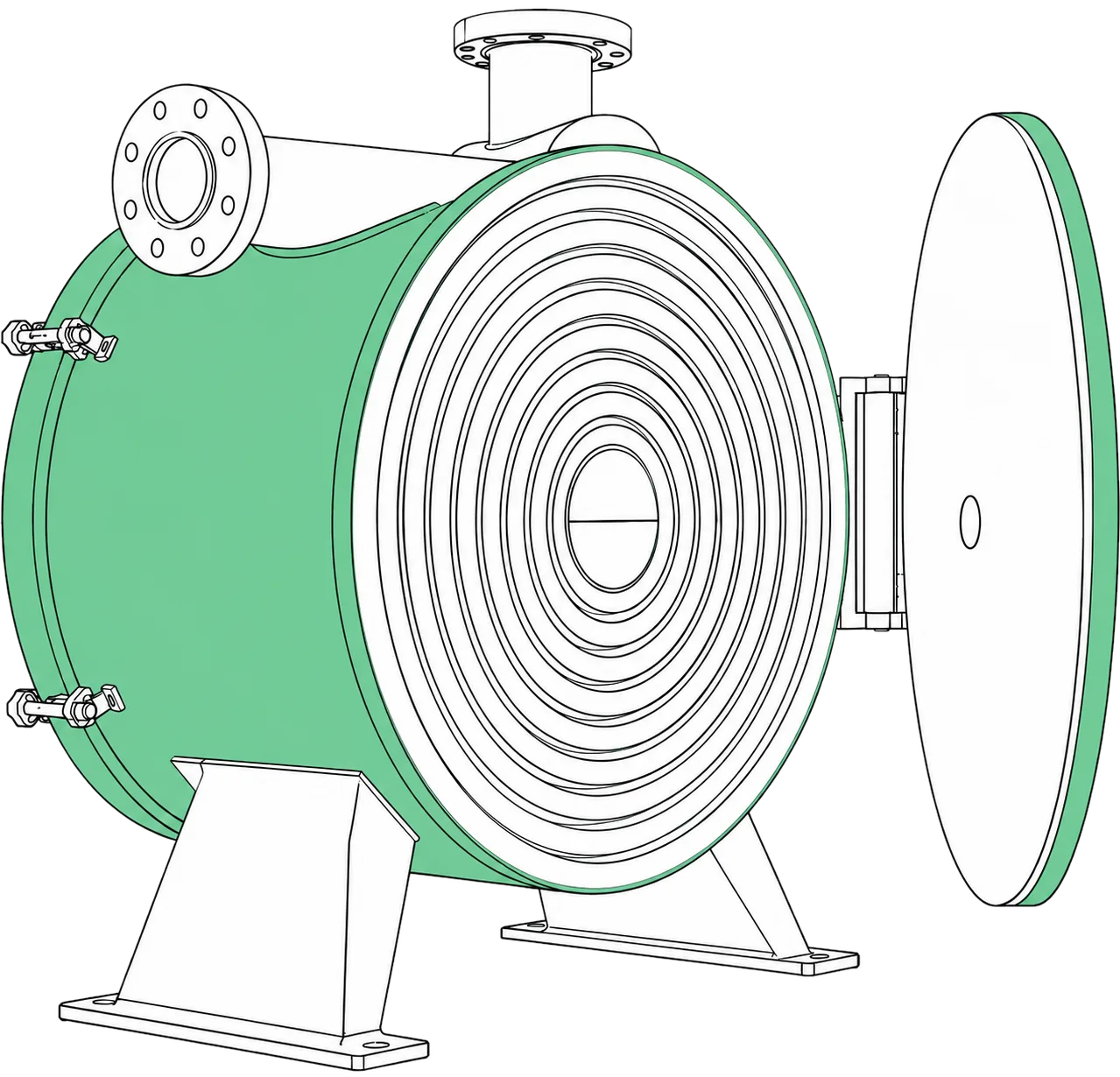
Spiral Heat Exchangers use a single continuous flow channel wound into a compact spiral — inherently self-cleaning, since the constant curvature generates centrifugal scrubbing action that keeps the channel clear. That makes them the go-to choice for fouling-prone, viscous, or high-solids-content fluids that would quickly clog a conventional plate or tube unit.

N-SHE1 software sizes Type 1 spiral configurations using calculations built around genuinely spiral-specific flow patterns and channel geometry, rather than correlations adapted from straight-channel exchangers. It accounts for the changing channel curvature along the spiral length, which affects heat transfer coefficient and pressure drop differently than a constant-geometry channel would.

The edge: spiral flow behavior doesn't follow the same correlations as plate or tube exchangers, and treating it as if it does produces sizing errors that only show up after fabrication. Our tool is purpose-built for spiral geometry specifically, so the results you get are accurate for the equipment you're actually buying.

Because spiral geometry is less commonly modeled than plate or tube exchangers, we've validated our calculation approach against published performance data and real installed units, rather than relying purely on theoretical channel-flow equations that can drift from actual field performance.

Request a Demo

Spiral Heat Exchanger Type 2

N-SHE2Spiral Heat Exchanger Type 2

Type 2 spiral configurations extend the spiral exchanger's self-cleaning advantage to a different flow arrangement — typically used where Type 1's configuration doesn't suit the specific combination of duty, space constraint, or flow pattern involved.

N-SPHE2 software calculates performance for this configuration specifically, rather than forcing a Type 1 approximation onto a Type 2 duty and hoping the difference doesn't matter. It handles the distinct flow path and channel arrangement Type 2 uses, producing sizing results that reflect the actual equipment configuration rather than a generalized spiral estimate.

The edge: knowing which spiral configuration genuinely fits your process is half the engineering problem, and getting it wrong means a unit that's technically a spiral exchanger but doesn't deliver the performance profile your duty needs. Our tool helps confirm the right configuration before you commit to fabrication, not after.

Where the choice between Type 1 and Type 2 isn't obvious from the duty alone, the tool flags the tradeoff explicitly — projected performance and footprint for both configurations — so you can make an informed choice rather than defaulting to whichever one you specified last time.

Request a Demo

Plate and Shell Heat Exchanger

N-PSPlate and Shell Heat Exchanger

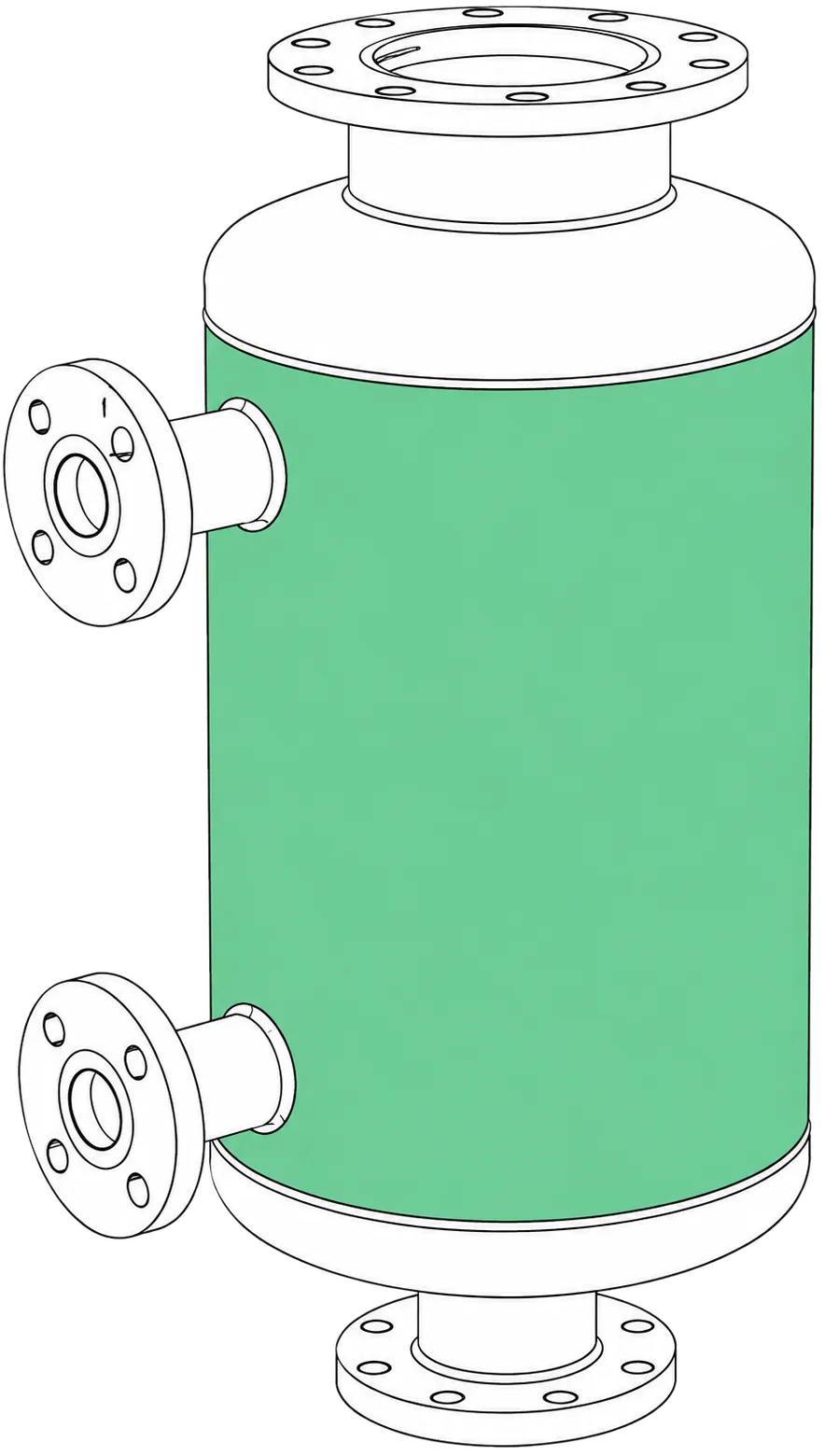
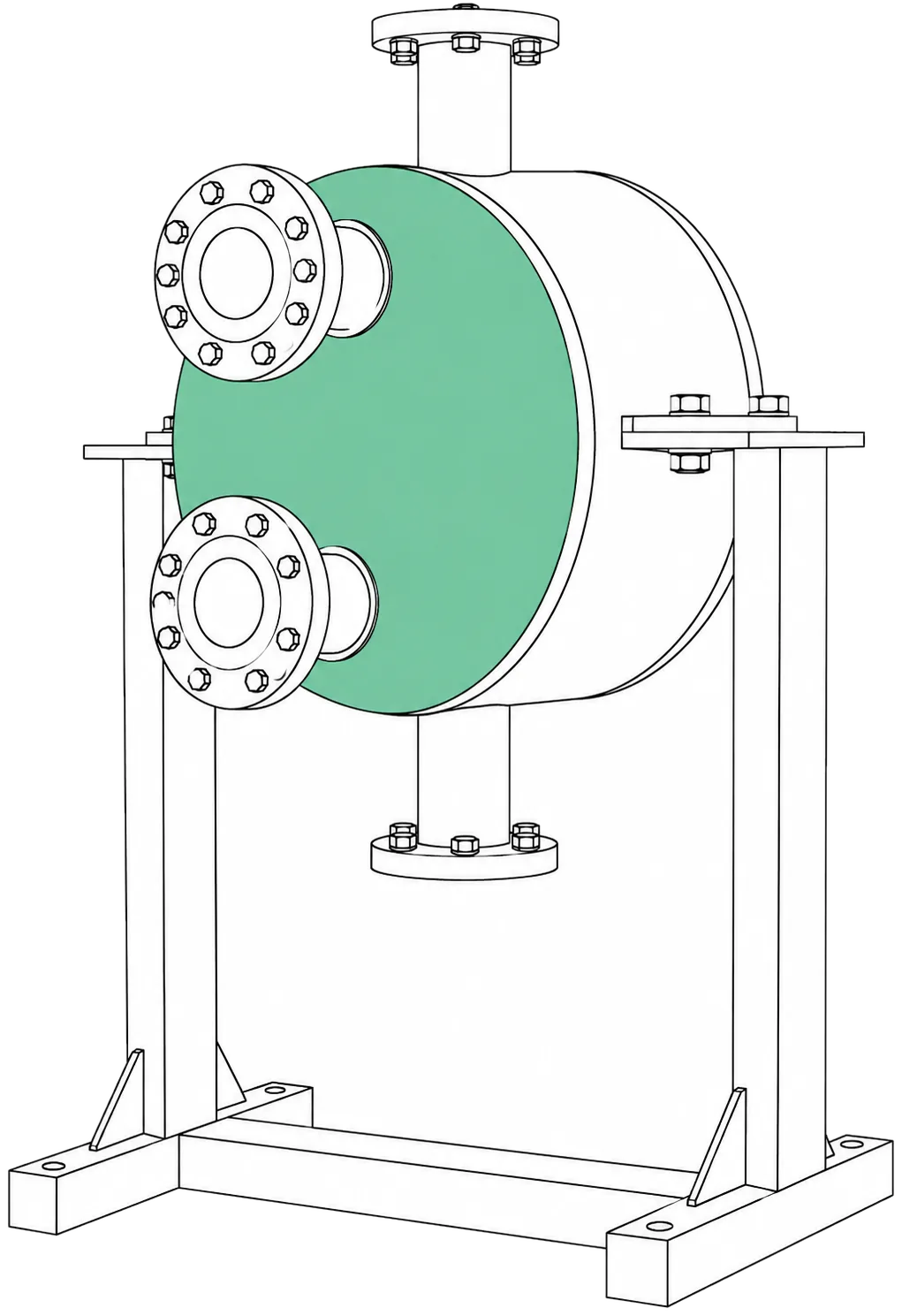
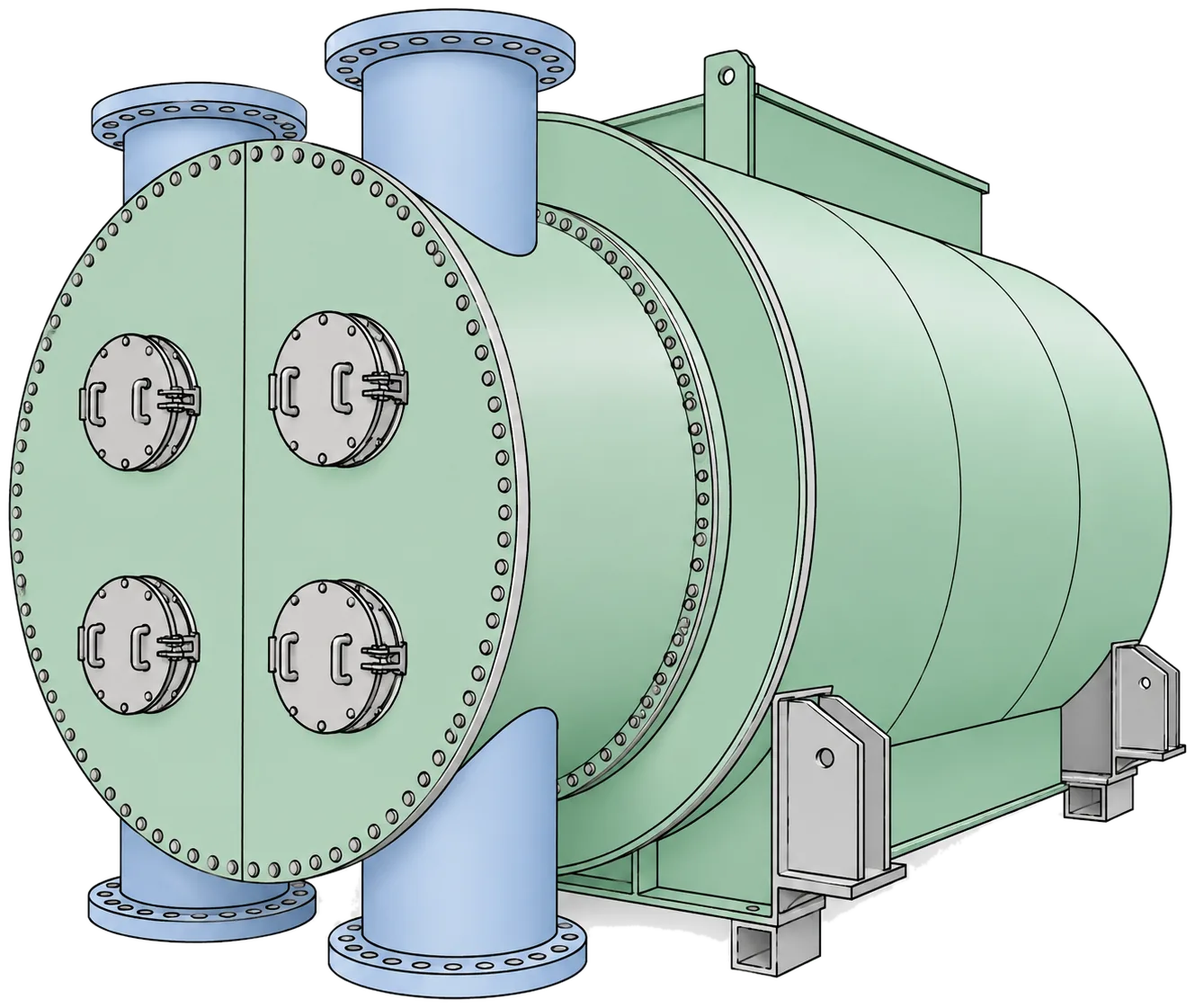
Plate and Shell exchangers combine the thermal efficiency of a plate pack with the pressure and temperature capability of a shell — a hybrid built for demanding duties that standard plate units can't handle safely, but where full shell-and-tube would be unnecessarily bulky.

N-PS software calculates both sides of this hybrid design together: plate-side thermal performance using plate-specific correlations, and shell-side pressure containment using pressure vessel design principles — rather than treating them as two separate problems solved independently and hoping they reconcile.

The edge: this hybrid geometry needs hybrid calculations. Most single-purpose sizing tools handle either plates or shells well, not both at once — ours accounts for the interaction between the two, which is exactly where sizing errors tend to hide in less integrated tools.

The tool also checks the design against applicable pressure vessel design margins for the shell, flagging cases where thermal optimization alone would produce a plate pack that doesn't fit safely within the pressure boundary — a conflict that's easy to miss when the two calculations are done separately.

Request a Demo

Shell and Tube Heat Exchanger

N-STShell and Tube Heat Exchanger

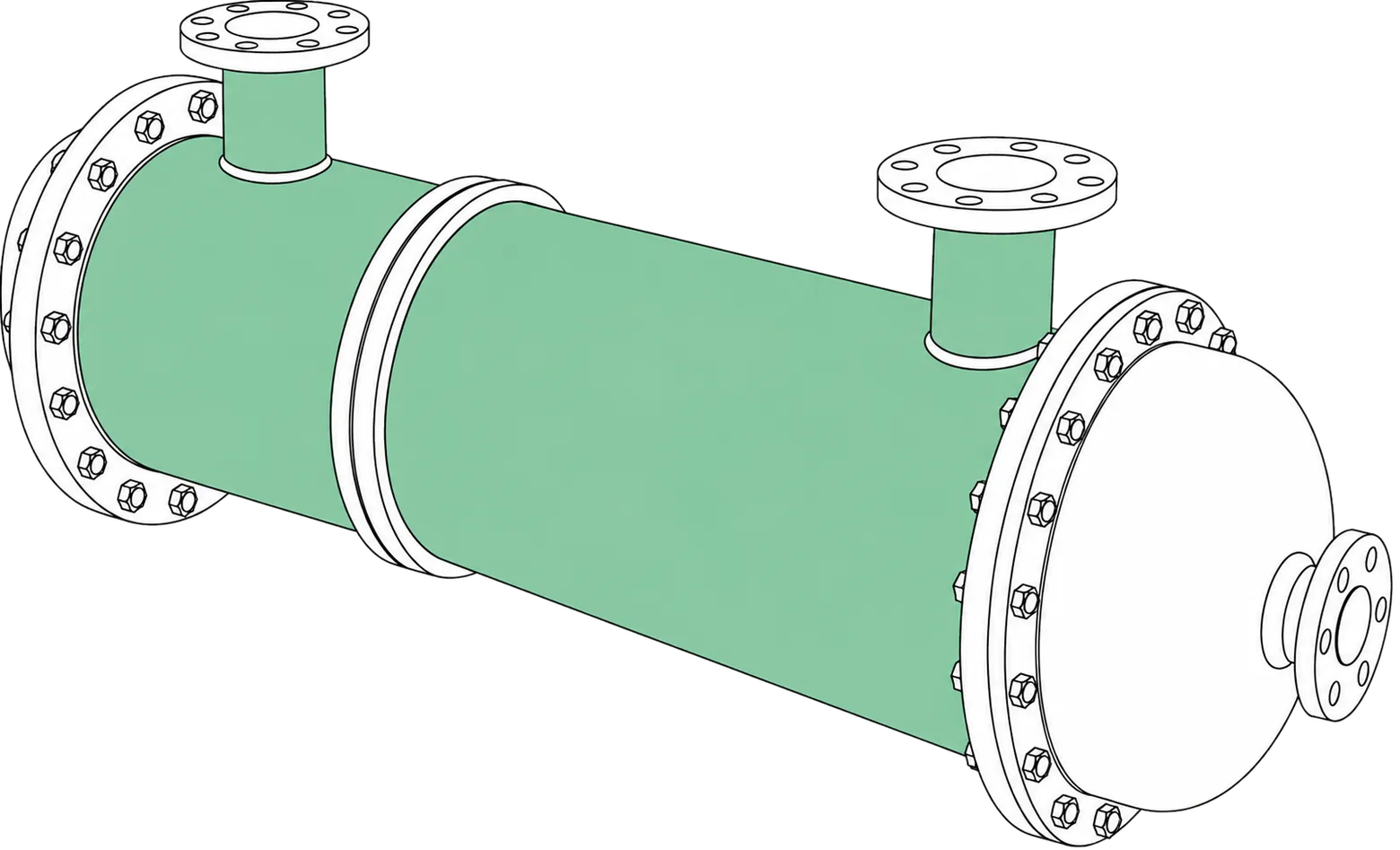
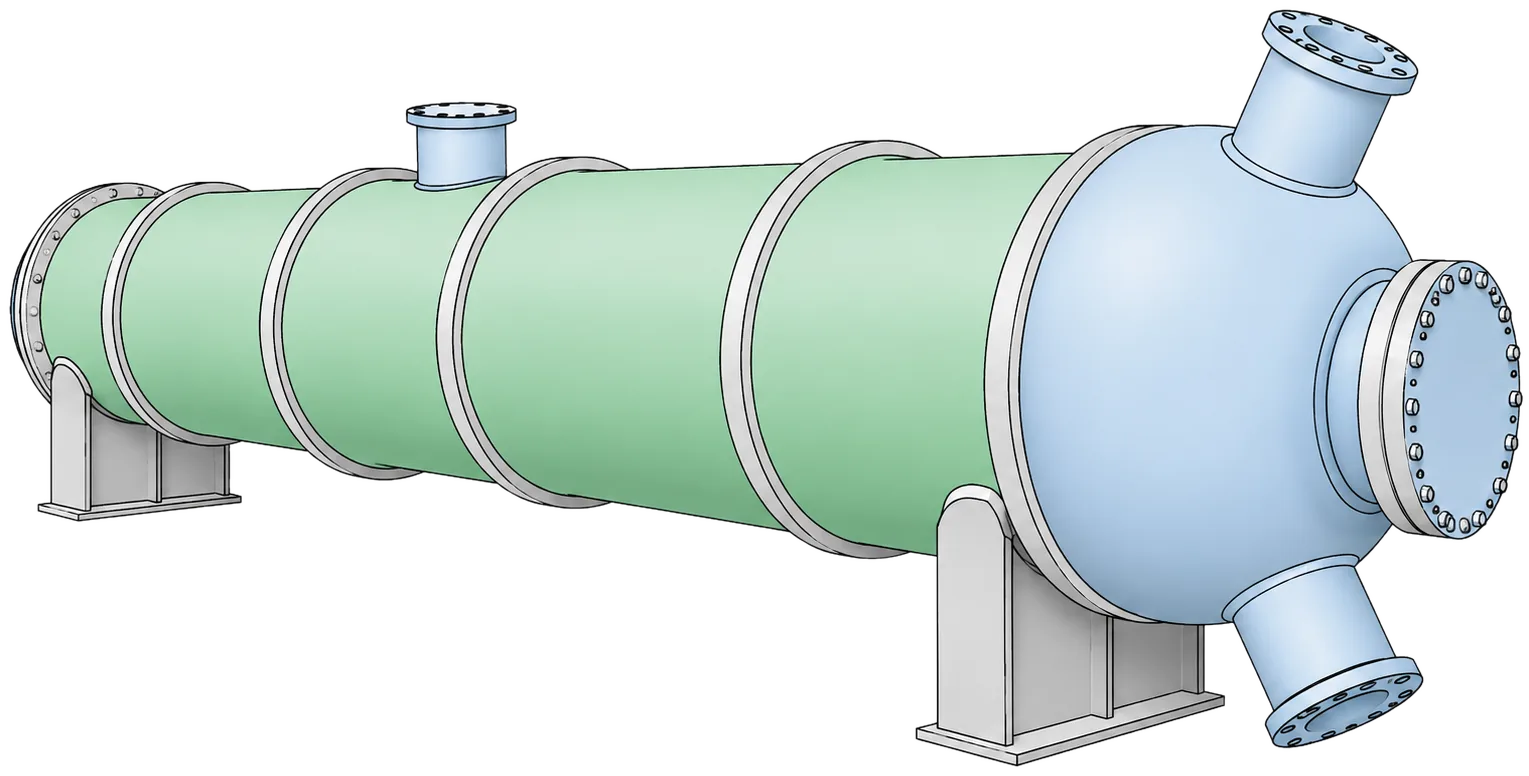
Shell and Tube exchangers remain the industry standard for good reason — proven over a century of use, robust in operation, and adaptable to nearly any process duty, fluid, pressure, or temperature range you'll encounter.

N-ST software handles the full sizing and rating calculation: tube count and layout, baffle spacing and cut, shell-side and tube-side pressure drop, and configuration checks against TEMA standard classes so the design you produce is one a fabricator will actually recognize and quote correctly.

The edge: shell and tube design has decades of established correlations behind it, and our tool applies them with genuine rigor rather than a simplified approximation — so results hold up against both engineering theory and long-established industry practice, which matters when the design goes in front of a client's own review engineer.

Output includes a full TEMA-format datasheet, ready to issue for fabrication quotes — tube layout drawing data, baffle configuration, nozzle sizing, and a complete thermal and mechanical performance summary in the format fabricators expect to receive.

Request a Demo

Waste Heat Recovery Boiler

N-WHRBWaste Heat Recovery Boiler

Waste Heat Recovery Boiler turn otherwise-lost process or exhaust heat into usable steam — a genuine efficiency and cost win when sized correctly, and a source of chronic underperformance when sized against generic assumptions instead of the actual waste heat source.

N-WHRB software calculates heat recovery potential, steam generation capacity, and tube-bank performance based on your actual waste heat stream — its real temperature profile, flow variability, and any contaminants that affect fouling and tube material selection — rather than a textbook flue gas composition that may not resemble your process at all.

The edge: waste heat streams vary enormously in temperature, flow consistency, and composition from one plant to the next. Our tool is built to size around your specific source data, so the boiler you design actually matches the heat you have available, not an idealized average.

Because turndown behavior matters as much as design-point performance for most waste heat sources, the tool models performance across the expected operating range, not just the single design condition — so you know how the unit will actually behave as upstream process load varies.

Request a Demo

Feed Water Heater

N-FWHFeed Water Heater

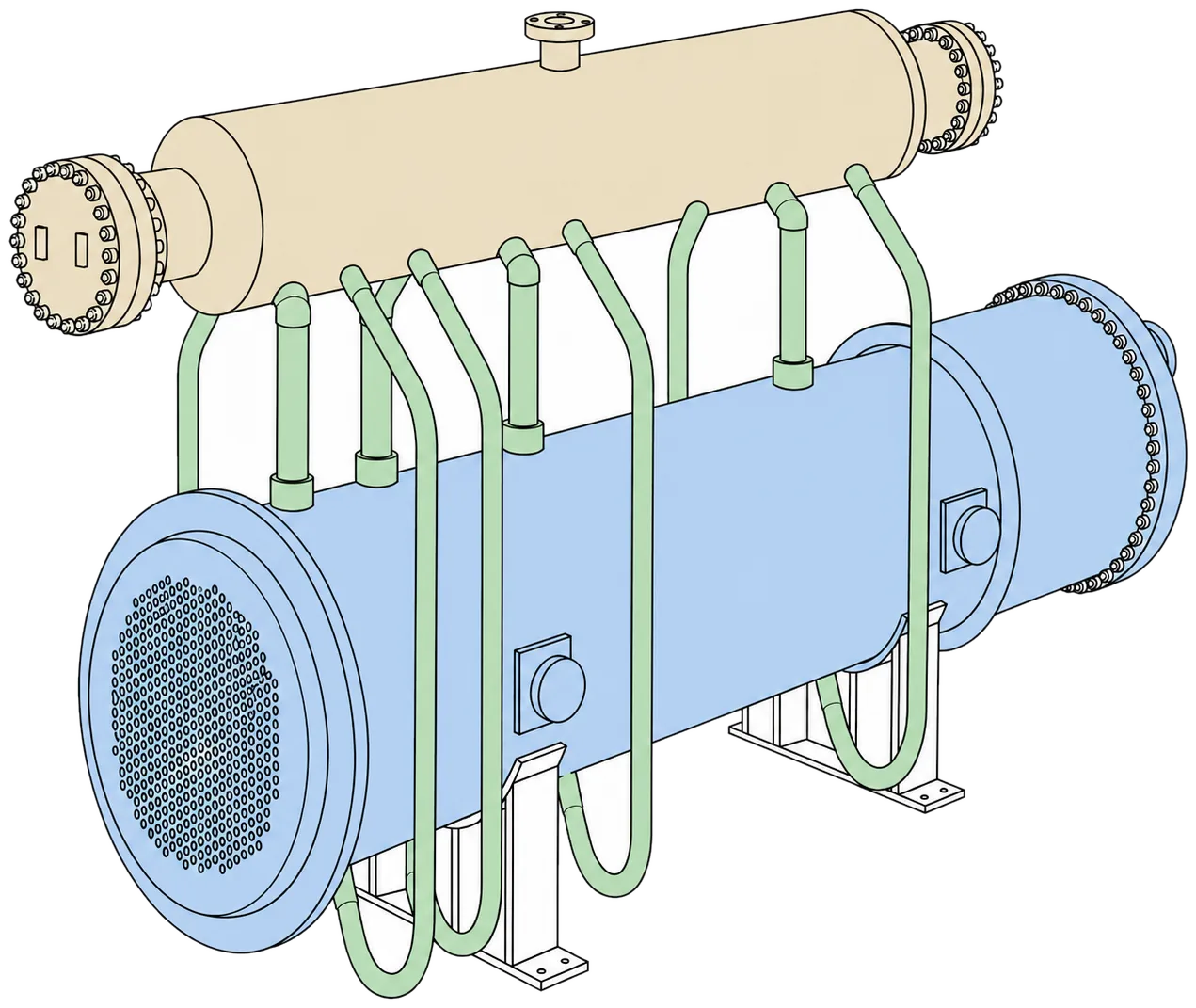
Feed Water Heaters improve boiler and power cycle efficiency by preheating feedwater using extracted or waste steam — a well-established, high-value efficiency measure in any steam cycle, but one that depends entirely on correct sizing to deliver its promised gain.

N-FWH software calculates thermal performance, tube bundle sizing, and drain cooling zone design specific to feedwater heating service — including the condensing and subcooling zones that distinguish a proper feedwater heater from a generic shell-and-tube exchanger pressed into the same role.

The edge: feedwater heaters have design considerations most generic heat exchanger tools don't account for — deaerating requirements, drain cooling zone sizing, and integration constraints with the broader steam cycle. Our tool is built around feedwater heating specifically, not adapted from a general-purpose exchanger calculation.

The tool models the full three-zone design where applicable — desuperheating, condensing, and drain cooling — since treating a feedwater heater as a single-zone exchanger is a common simplification that produces an optimistic and ultimately inaccurate performance estimate.

Request a Demo

Surface Condenser

N-SCSurface Condenser

Surface Condenser handle one of the most critical duties in any power or process plant — condensing turbine exhaust steam efficiently, at the vacuum conditions the entire thermodynamic cycle depends on for its overall efficiency.

N-SC software calculates tube bundle sizing, vacuum-side performance, and cooling water requirements specific to condenser duty, including the air in-leakage and non-condensable gas handling considerations that distinguish condenser design from routine heat exchanger sizing.

The edge: condenser performance has an outsized effect on overall plant output and efficiency — a poorly sized condenser doesn't just underperform locally, it drags down the entire cycle's economics. Our tool is built to get the vacuum-side calculations right, not approximate them, because the stakes of getting this one wrong are higher than for most other equipment in the plant.

The tool models air in-leakage sensitivity explicitly, since even small amounts of non-condensable gas ingress can measurably degrade vacuum performance — a factor that's easy to overlook in a straightforward duty calculation but shows up immediately in real operating data.

Request a Demo

Dry Cooler

N-DCDry Cooler

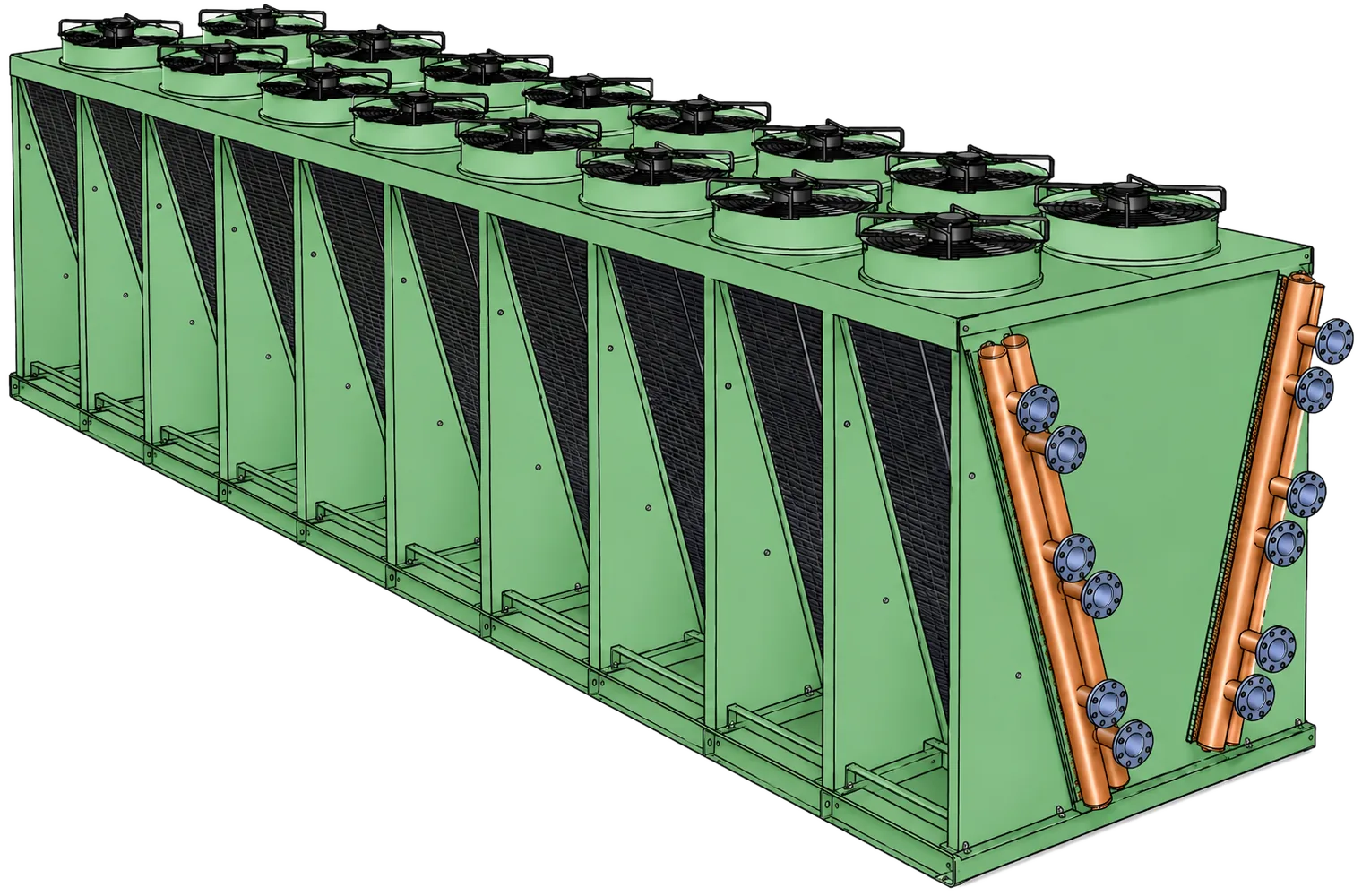
Dry Coolers reject heat to ambient air without consuming water — an increasingly important option wherever water use is restricted, costly, or simply unavailable in the quantities a wet cooling tower would require.

N-DC software calculates finned-tube performance, fan sizing, and sensitivity to ambient design conditions specific to dry cooling duty — accounting for the way dry cooler performance shifts with ambient temperature far more dramatically than water-cooled equipment does.

The edge: dry cooler performance is highly sensitive to ambient temperature swings across the year, and sizing against a single fixed design-day assumption is a common source of summer performance shortfalls. Our tool accounts for real seasonal variation at your site, not just a textbook worst-case number.

The tool runs performance checks across a full seasonal temperature range rather than a single design point, flagging any month where predicted performance falls short of duty requirements — the same gap that, left unchecked, tends to surface as a real operational problem the first hot summer after installation.

Request a Demo

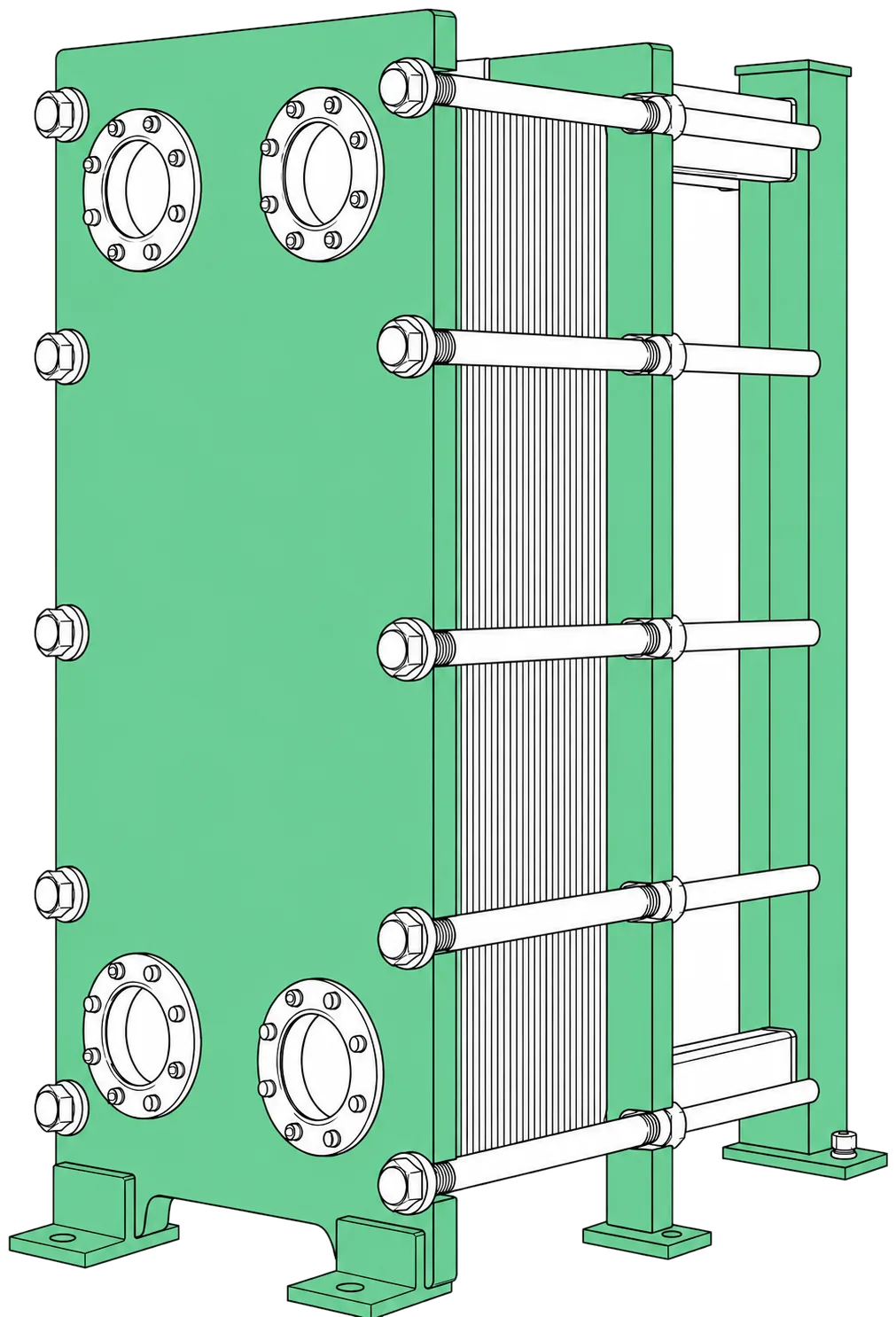
Graphite plate and frame heat exchanger built to a non-standard specification
Graphite Plate and Frame Heat Exchanger
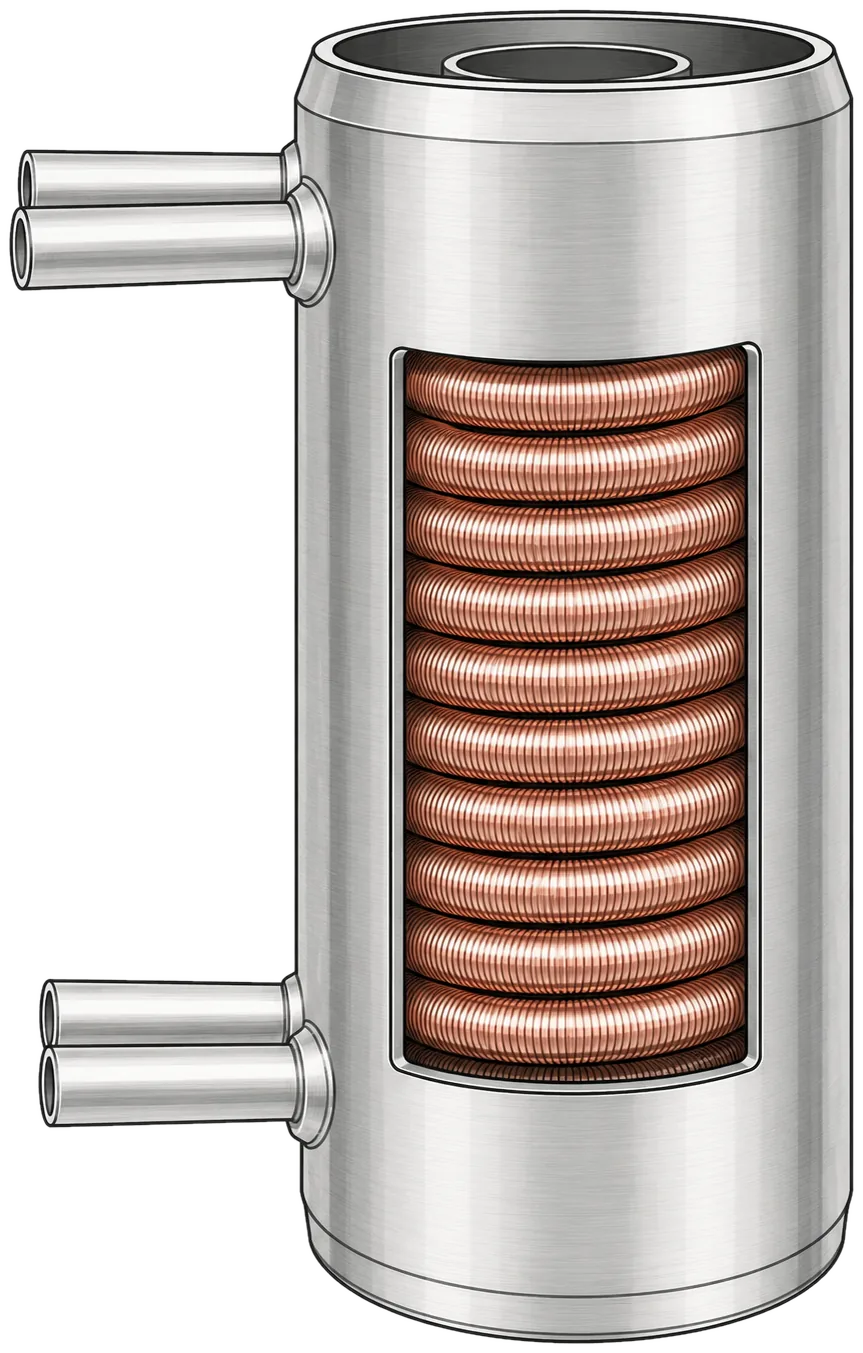
Shell and coil heat exchanger built for a duty outside the standard range
Shell and Coil Heat Exchanger
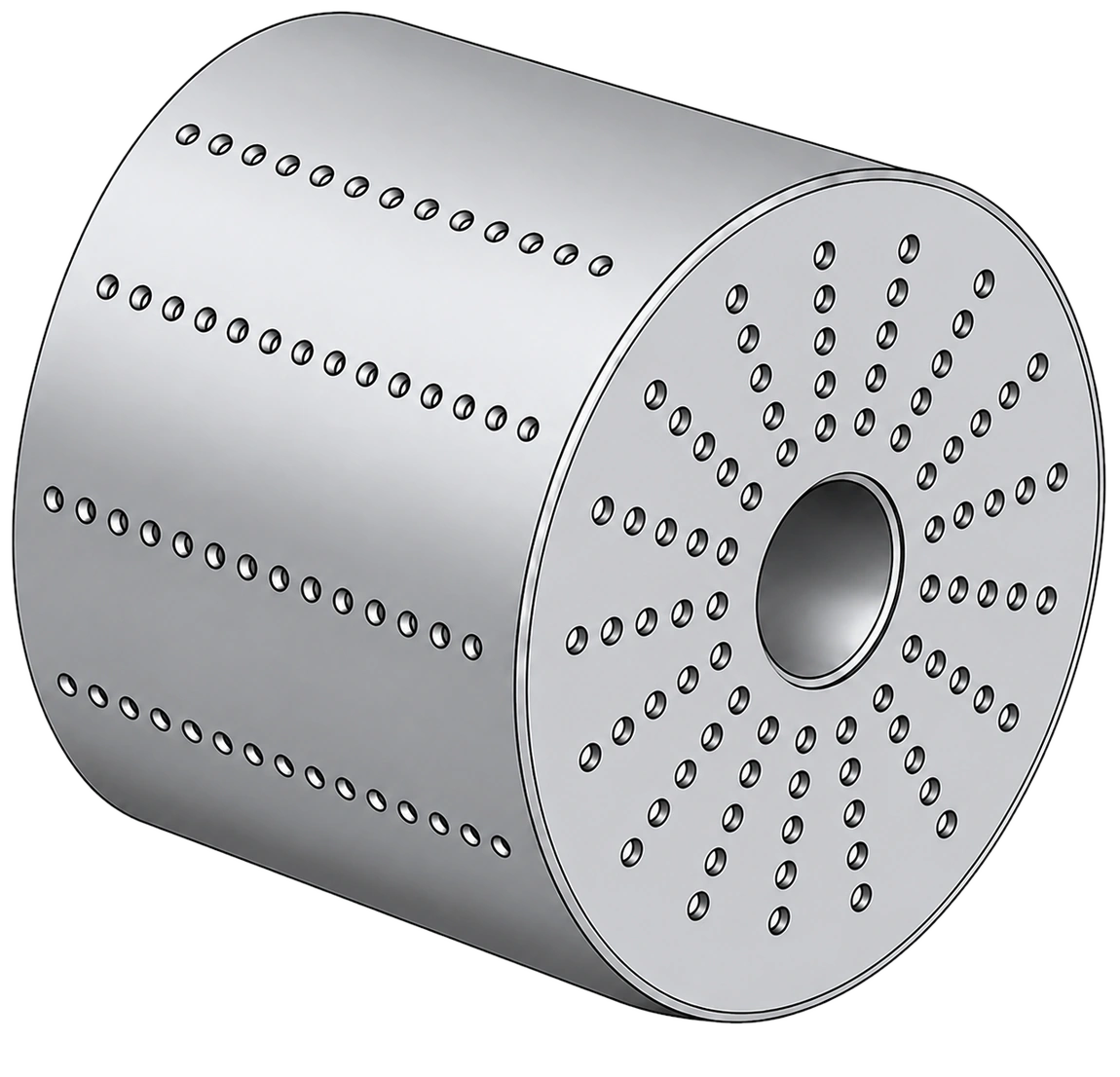
Graphite block heat exchanger for highly corrosive service
Graphite Shell and Tube Heat Exchanger

CustomSoftware built around your problem

Our standard tools cover the equipment most engineers size every day — but process industries are full of exceptions, and standard tools have limits by design.

If your requirement falls outside them — a multi-stream exchanger, simultaneous boiling and condensing in one unit, cryogenic or supercritical fluid behaviour, non-Newtonian or slurry flows, fouling-life prediction, or a heat exchanger network that needs optimizing across multiple units rather than one at a time — we build the tool around your actual problem, not the other way around.

If it’s not one of our standard categories, that doesn’t mean we can’t build it. It means it’s exactly the kind of project Custom Software exists for.

Request a Demo

Contact Us
sales@nthalpix.com +91 73040 62438 WhatsApp Contact Us