Marketplace

Sourcing heat transfer equipment is rarely a catalogue problem. The hard part is establishing what you actually need — which plate pattern, which gasket material, which configuration — before anyone quotes on it. We identify the specification first, then connect you with a supplier who can deliver it.

Equipment

Heat Exchangers

Plate & Frame Heat Exchanger

Plate & Frame Heat Exchanger

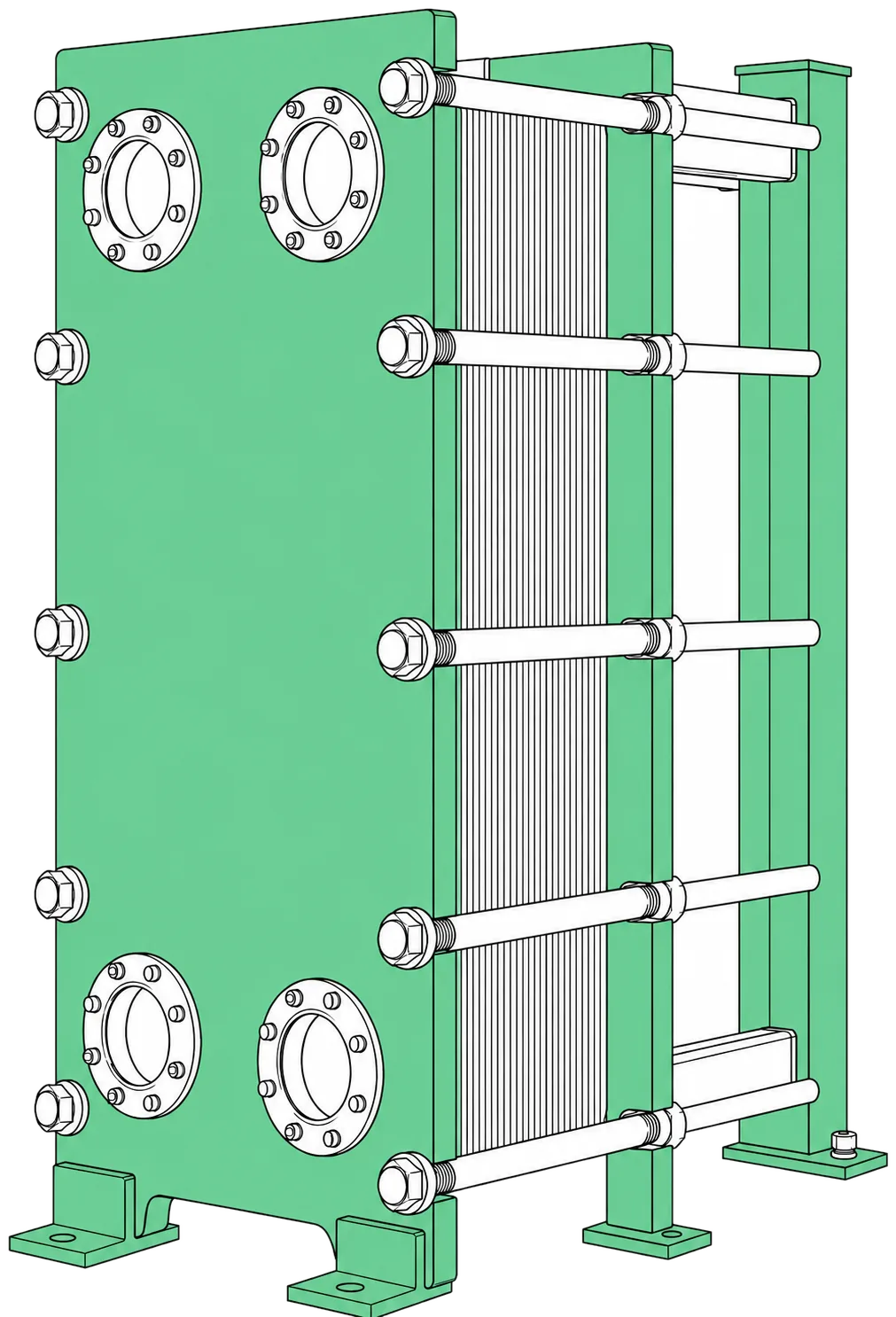
Sourcing a Plate & Frame Heat Exchanger — new equipment or a replacement for an aging unit — usually starts with more questions than answers: which plate pattern, how many plates, which gasket material for your fluid, and which supplier can actually deliver on your timeline.

We help you cut through that by defining the right specification for your actual duty first, based on real thermal-hydraulic calculation rather than a generic catalog match, so you're requesting quotes for the right equipment instead of comparing quotes for the wrong one.

Once the specification is clear, we connect you with suppliers positioned to deliver it — so you're not stuck choosing between an oversized, overpriced quote and a cheaper unit that won't actually perform at your duty conditions.

We also support the other side of this: if you're a supplier or fabricator, this is a channel to reach buyers who've already had their requirement engineered correctly, rather than fielding vague inquiries that take days of back-and-forth just to clarify what's actually needed.
Request a Consultation

Brazed Heat Exchanger

Brazed Heat Exchanger

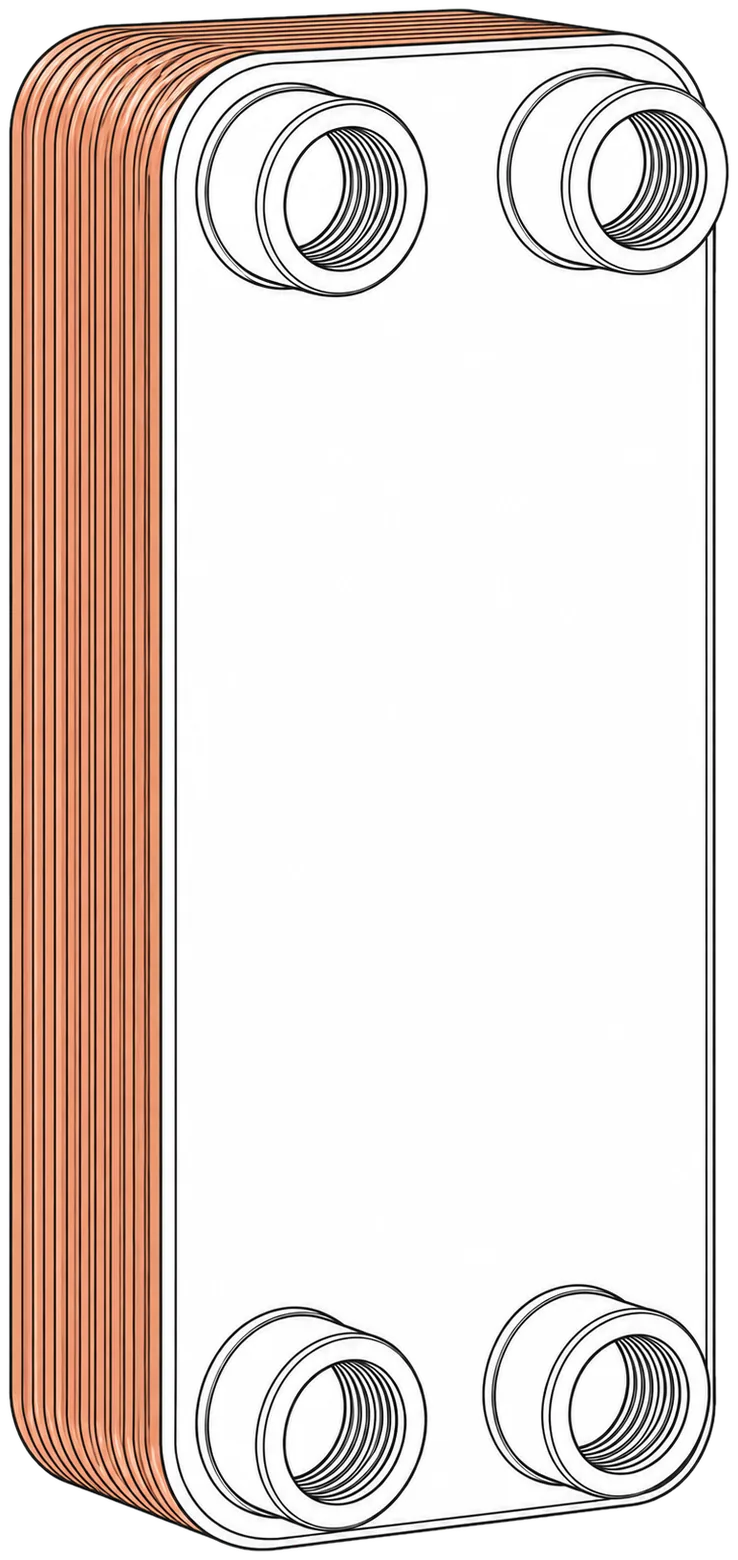
Brazed Heat Exchangers are often bought off a catalog by part number, which works fine until the duty is even slightly non-standard — a different refrigerant, an unusual approach temperature, or a footprint constraint the standard range doesn't cover.

We help specify the right unit for your actual duty — refrigerant compatibility, plate count, connection sizing — before you request quotes, so you're comparing suppliers on equivalent, correctly specified equipment rather than guessing which catalog model is close enough.

From there, we connect you with a supplier who can deliver the specified unit, avoiding the common trap of picking the nearest standard size off a catalog and hoping the performance gap doesn't matter.

For OEMs and system integrators sourcing brazed units in volume, we can also help standardize specifications across a product line, so procurement isn't re-deriving the same sizing decisions for every project.

Request a Consultation

Welded Bloc

Welded Bloc

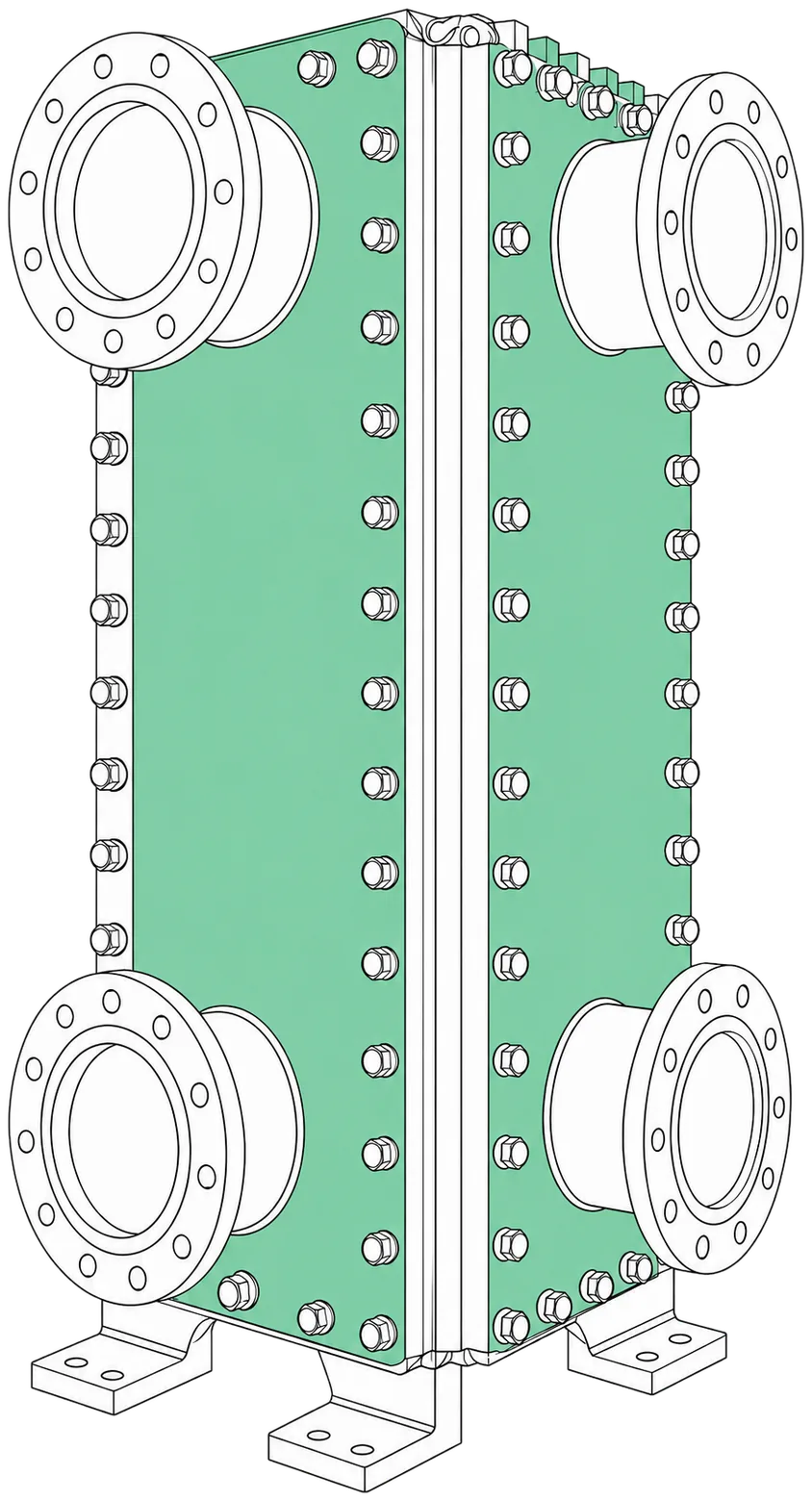
Welded Bloc exchangers are specialized equipment, usually needed for a duty that's already ruled out standard alternatives — which means sourcing them well requires getting the specification right first, since there's little room for a 'close enough' substitute.

We help define the right specification for your high-pressure or corrosive duty — materials of construction, pressure rating, welded-joint requirements — before you go to market for quotes, so suppliers are bidding on the same correctly defined scope.

We then connect you with a supplier equipped to actually fabricate to that specification, which matters more here than for most equipment categories, since not every fabricator is set up for demanding welded-block construction.

Given how specialized this category is, we typically maintain relationships with a small number of qualified fabricators rather than a broad supplier list — fewer options, but ones we've already confirmed can deliver to the specification.

Request a Consultation

Plate and Shell Heat Exchanger

Plate and Shell Heat Exchanger

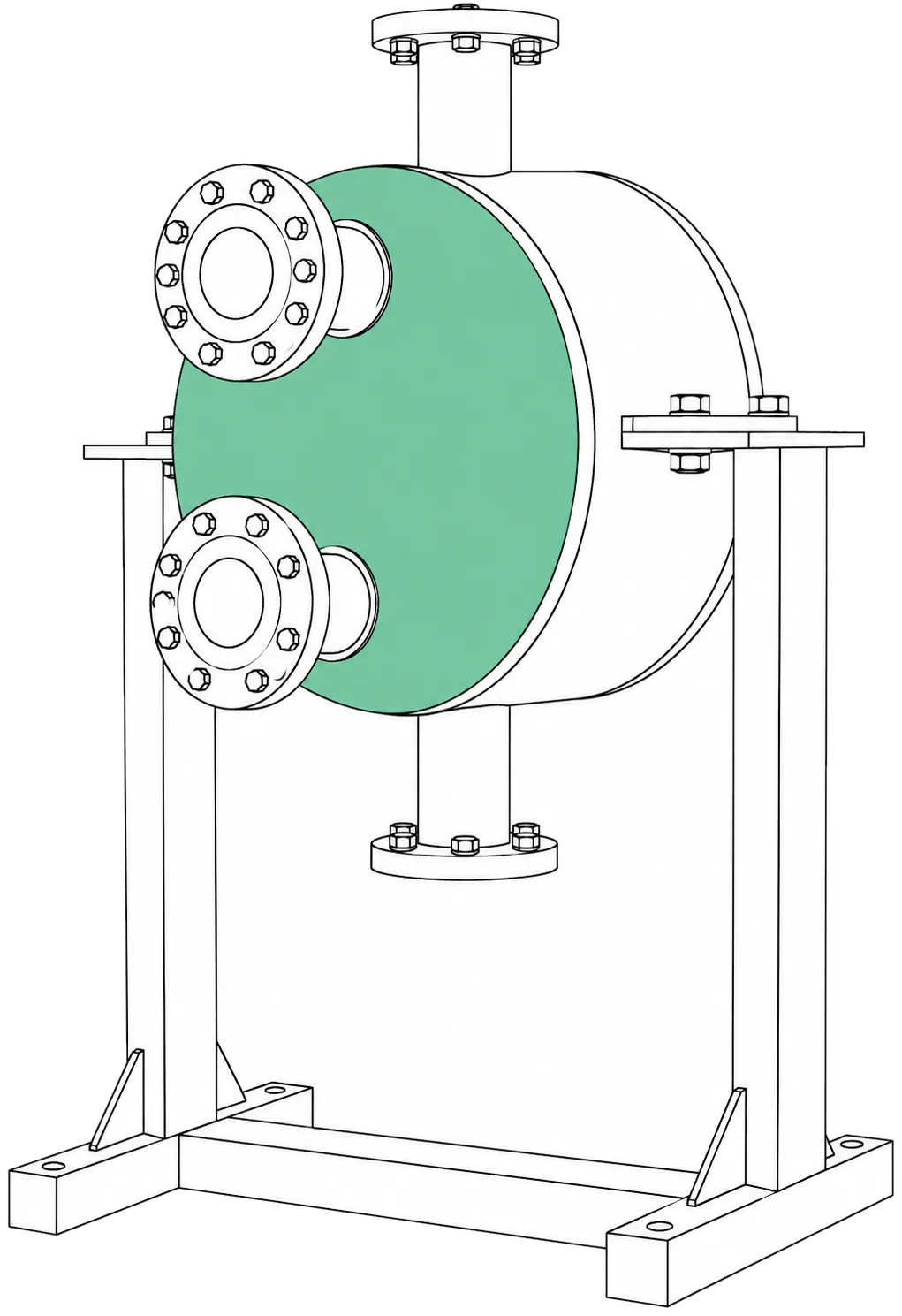
Plate and Shell exchangers sit in a specialized category — not every supplier builds them well, and specifying one incorrectly (plate-side thermal performance and shell-side pressure containment both have to be right together) is a common source of procurement delays.

We help define the specification for your high-pressure or high-temperature duty across both sides of this hybrid design, so you're sourcing equipment against a specification that's actually been engineered, not estimated from a similar past project.

We then connect you with a supplier capable of delivering it — an important filter in this category, since plate and shell fabrication capability varies significantly between suppliers.

Because so few fabricators genuinely specialize in plate and shell construction, supplier selection here often matters as much as the specification itself — we help you avoid a supplier who's capable on paper but inexperienced in practice.

Request a Consultation

Spares

Parts

Plates for plate heat exchangers

Plates

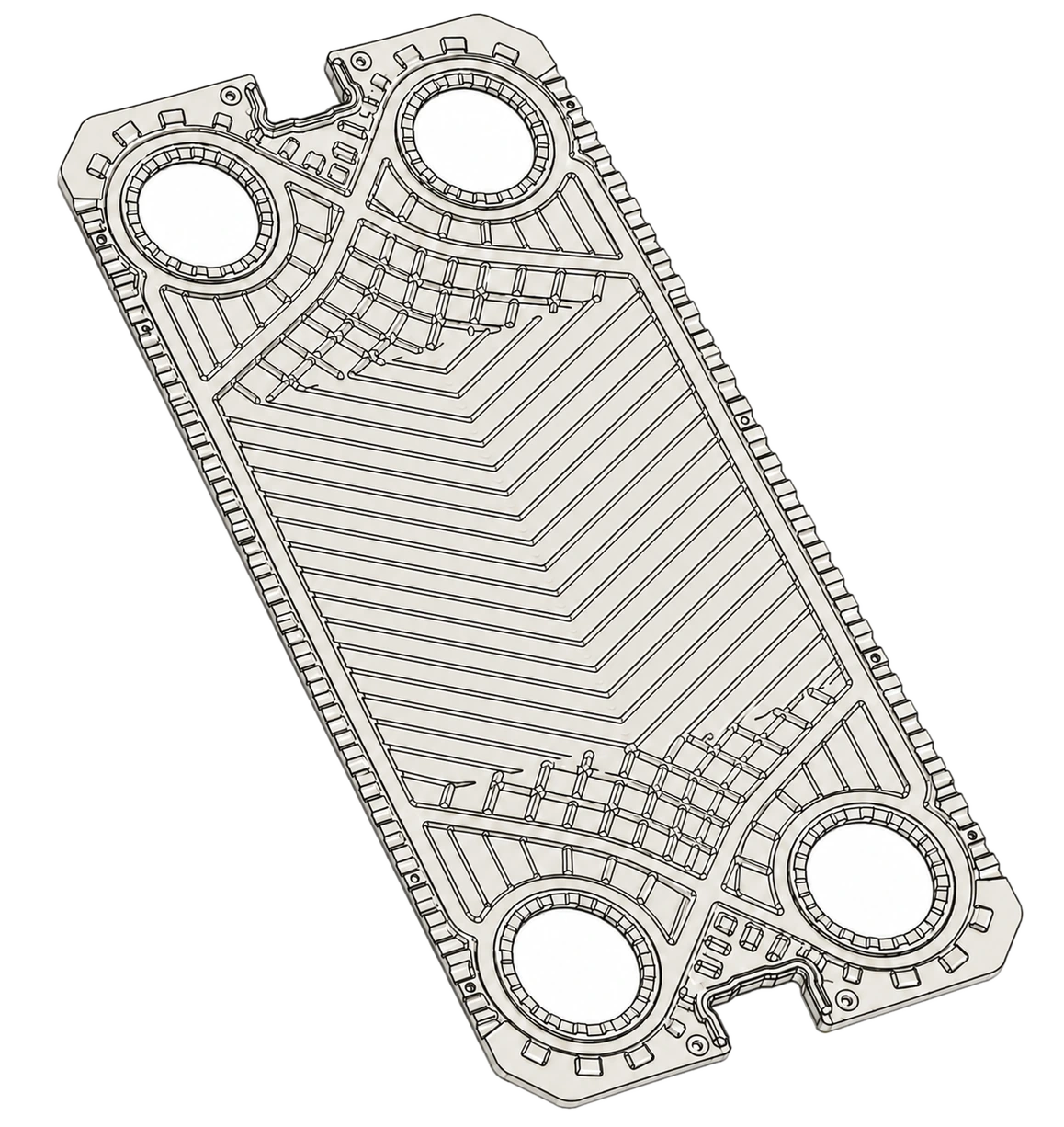
Plate & Frame and Brazed exchangers depend on their plate pack for actual thermal performance — the corrugation pattern, material, and thickness all directly determine how much heat transfer area and turbulence the unit delivers.

Replacing plates isn’t the simple like-for-like swap it looks like. Corrugation angle and chevron pattern vary between manufacturers, and even between product generations from the same manufacturer — a mismatched plate can quietly throw off thermal performance, or simply fail to seat correctly against the rest of the pack.

Plate material has to match your process fluid’s corrosion and temperature demands, not just the thermal duty. Standard duties are typically specified in SS304 or SS316; more aggressive chloride exposure or higher corrosion resistance requirements move the specification to Titanium Grade 1 (commercially pure titanium) or Grade 11 (a titanium-palladium alloy, offering enhanced crevice and general corrosion resistance over Grade 1 in the most aggressive chloride and reducing-acid environments); and the most demanding chemical or high-temperature services call for SMO 254 or Hastelloy C-276. Specifying a lower-grade material to save cost upfront is one of the more common ways plate exchangers fail early.

We help identify the correct plate specification — pattern, thickness, and material grade — for your installed unit, working from nameplate data, existing drawings, or a physical inspection where needed, and connect you with a supplier who can deliver plates that actually match your unit’s original design intent, not just its rough dimensions.

Request a Consultation

Gaskets for plate heat exchangers

Gaskets

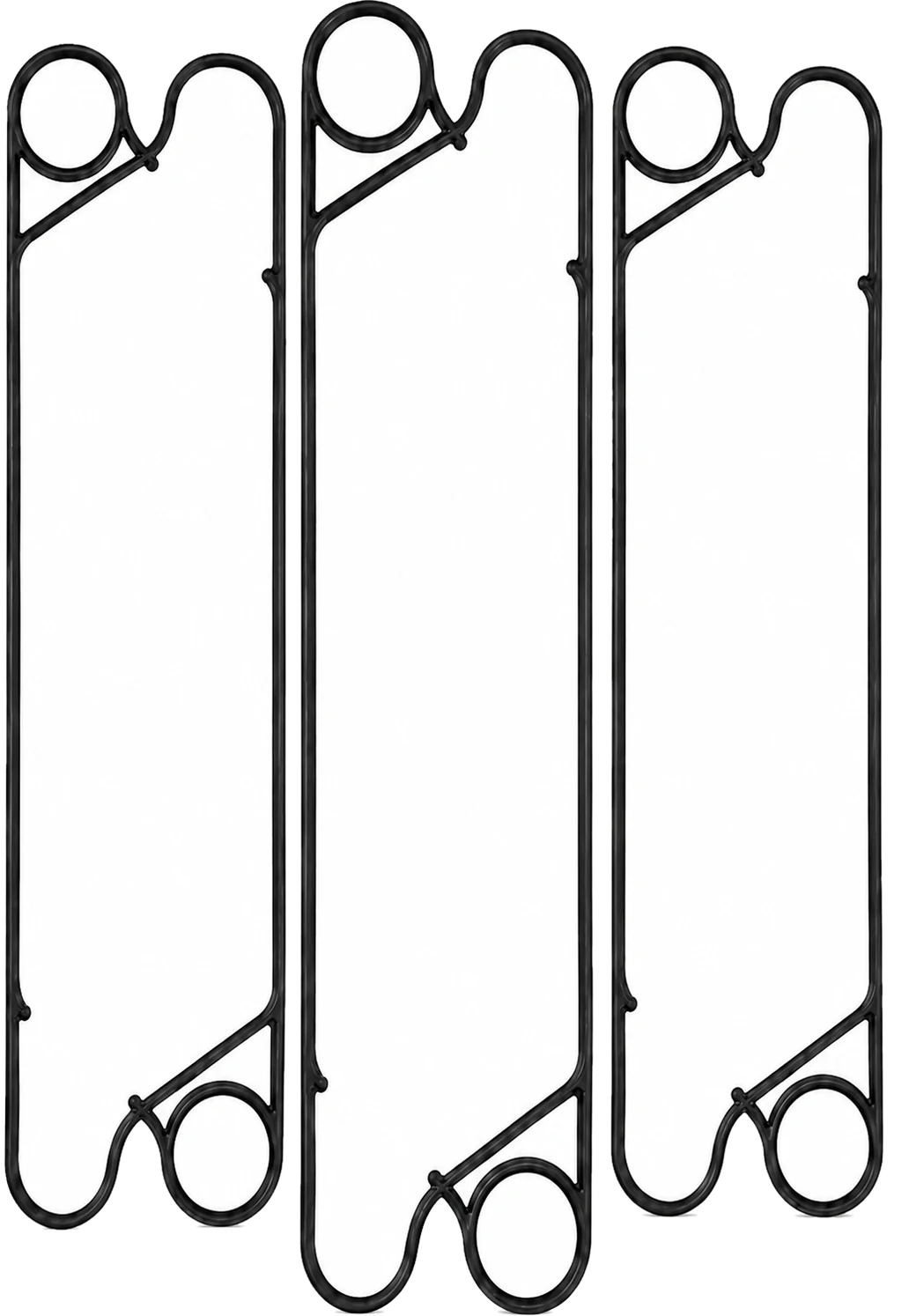
Gaskets are usually the first thing to fail on a plate exchanger, and for good reason — they’re the wear component, expected to seal repeatedly against pressure, temperature cycling, and chemical exposure over years of service.

Getting the gasket material wrong is a common and costly mistake. The wrong elastomer for your process fluid can degrade quickly, cause leaks, or contaminate the process stream — and gasket profiles vary enough between manufacturers that a close visual match doesn’t guarantee a proper seal.

Elastomer choice depends entirely on what the gasket actually has to withstand. NBR (nitrile) handles general oil and water duties at moderate temperatures; EPDM suits steam, hot water, and many chemical services but degrades quickly in contact with mineral oils; Viton (FKM) holds up in high-temperature and aggressive chemical environments where NBR and EPDM won’t survive; and PTFE-coated EPDM combines EPDM’s base elasticity with PTFE’s near-universal chemical resistance, for duties where the process fluid would otherwise attack the elastomer directly. Choosing based on price alone, without checking actual chemical compatibility, is one of the most common causes of premature gasket failure.

We help confirm the correct gasket material and profile for your fluid and operating conditions, then connect you with a supplier who can deliver the right part — rather than leaving you to source a lookalike gasket and find out only after it’s installed whether it actually holds.

Request a Consultation

Contact Us
sales@nthalpix.com +91 73040 62438 WhatsApp Contact Us