Engineering

Engineering expertise for complex industrial problems

Process Design

Software puts our calculation engines directly in your hands — fast, self-serve, and built for teams who want to run their own sizing and rating in-house.

Engineering is the other way to work with us: hand off the problem entirely, and our team designs, delivers, and stands behind the result. Same underlying expertise, same rigor — just delivered as a finished outcome instead of a tool.

We take on new installation design, rating and revamp of existing plant, and failure analysis on units that are not performing to specification. Every engagement is run by a named engineer, and every calculation is transparent enough to defend in a design review.

Below are the eleven categories we design across. Each is a discipline in its own right, and each is handled by engineers who have built, optimised, and troubleshot that equipment in the field.

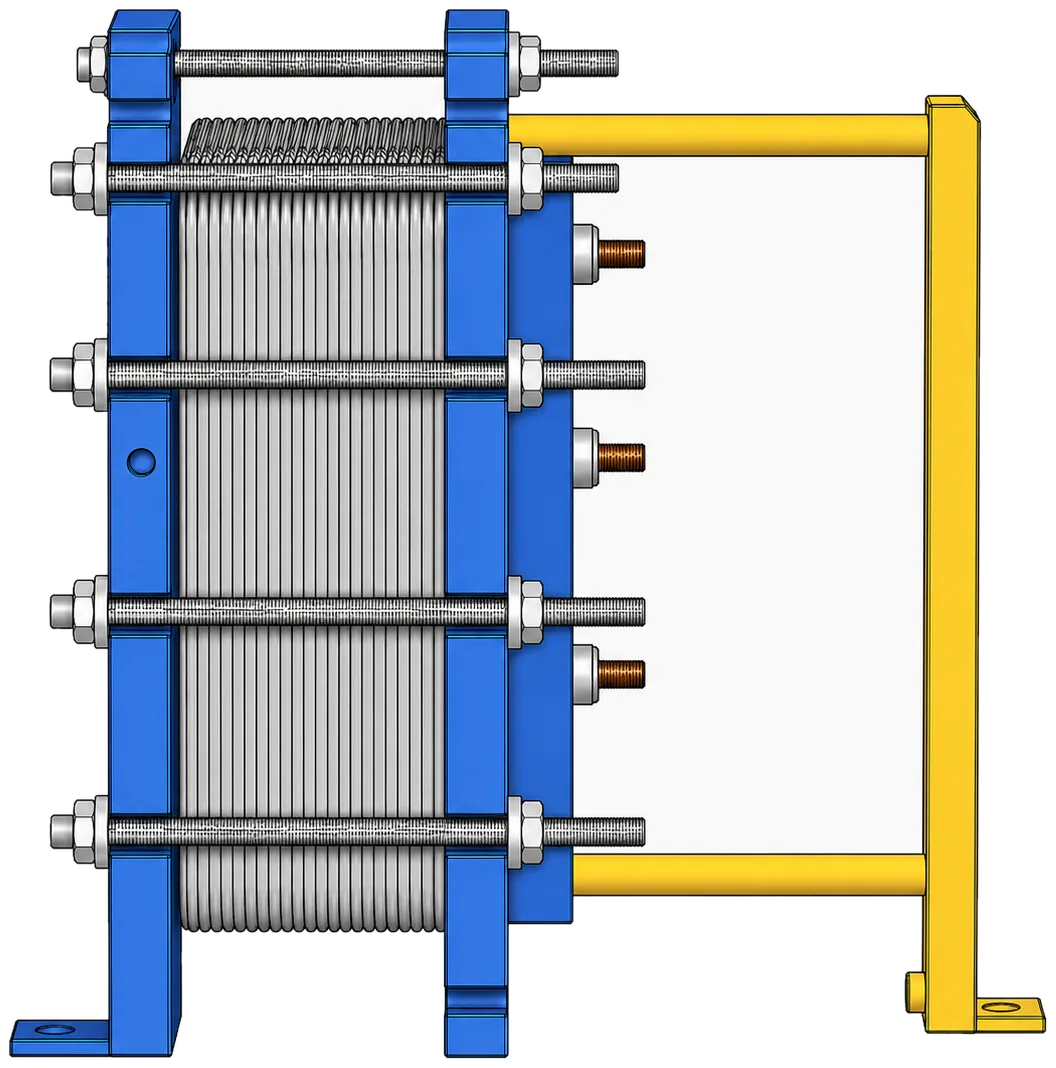
Plate & Frame Heat Exchanger

Plate & Frame Heat Exchanger

Some plate & frame problems don't fit neatly into a sizing run. A unique fluid combination with unusual viscosity or fouling behavior, a tight footprint that rules out standard frame sizes, or a unit already installed and underperforming — these need a person, not just a calculation.

Our engineering team designs plate & frame exchangers directly for exactly these cases, working through the same thermal-hydraulic fundamentals behind our N-PHE software, but applying engineering judgment where a standard sizing algorithm would need manual override — non-standard chevron combinations, mixed-plate packs, or unusual port arrangements to fit an existing pipe layout.

We also handle troubleshooting on installed units: falling performance, excessive pressure drop, or premature fouling that a maintenance team can't diagnose on their own. Because we understand both the plate-side physics and the mechanical realities of frame assembly, we can trace a performance problem back to its actual cause — gasket degradation, flow maldistribution, or genuine undersizing — rather than guessing.

Typical engagements run from a single design review to full new-installation engineering, and we scope each one based on what's actually needed — a two-hour sanity check on someone else's design, or a complete specification built from your process data upward.
Request a Consultation

Brazed Heat Exchanger

Brazed Heat Exchanger

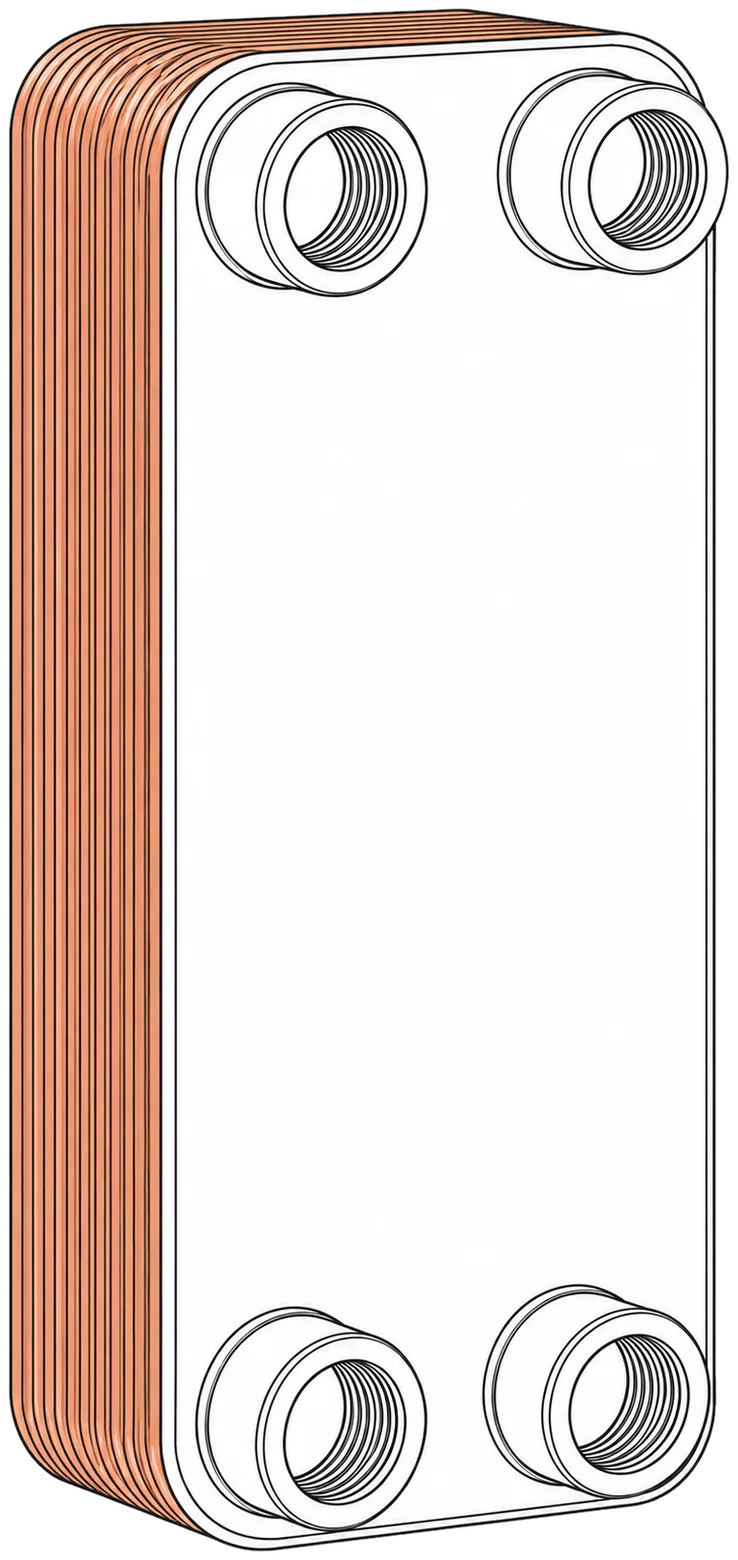
Brazed units are unforgiving of sizing mistakes. Once the plate pack is brazed shut, there's no adding a plate to recover lost capacity or removing one to cut pressure drop — the design has to be right before fabrication, not adjusted after.

Our engineers step in for duty-critical brazed exchanger design: refrigerant and process fluid compatibility checks, approach-temperature optimization for tight HVAC or heat pump duties, and material selection between copper and nickel brazing depending on the fluid chemistry involved.

We also troubleshoot installed units that aren't hitting rated performance — often a subtler diagnosis than it looks, since a brazed unit can't be opened to inspect. We bring the same calculation rigor as our software, plus the field judgment to interpret indirect symptoms — temperature approach drift, unexpected pressure drop — and identify the actual cause without dismantling the unit.

Because brazed units are common in refrigeration and heat pump systems built by OEMs and system integrators, we also work directly with equipment manufacturers who need a specific unit engineered into a larger system design, not just a standalone exchanger.

Request a Consultation

Welded Bloc

Welded Bloc Heat Exchanger

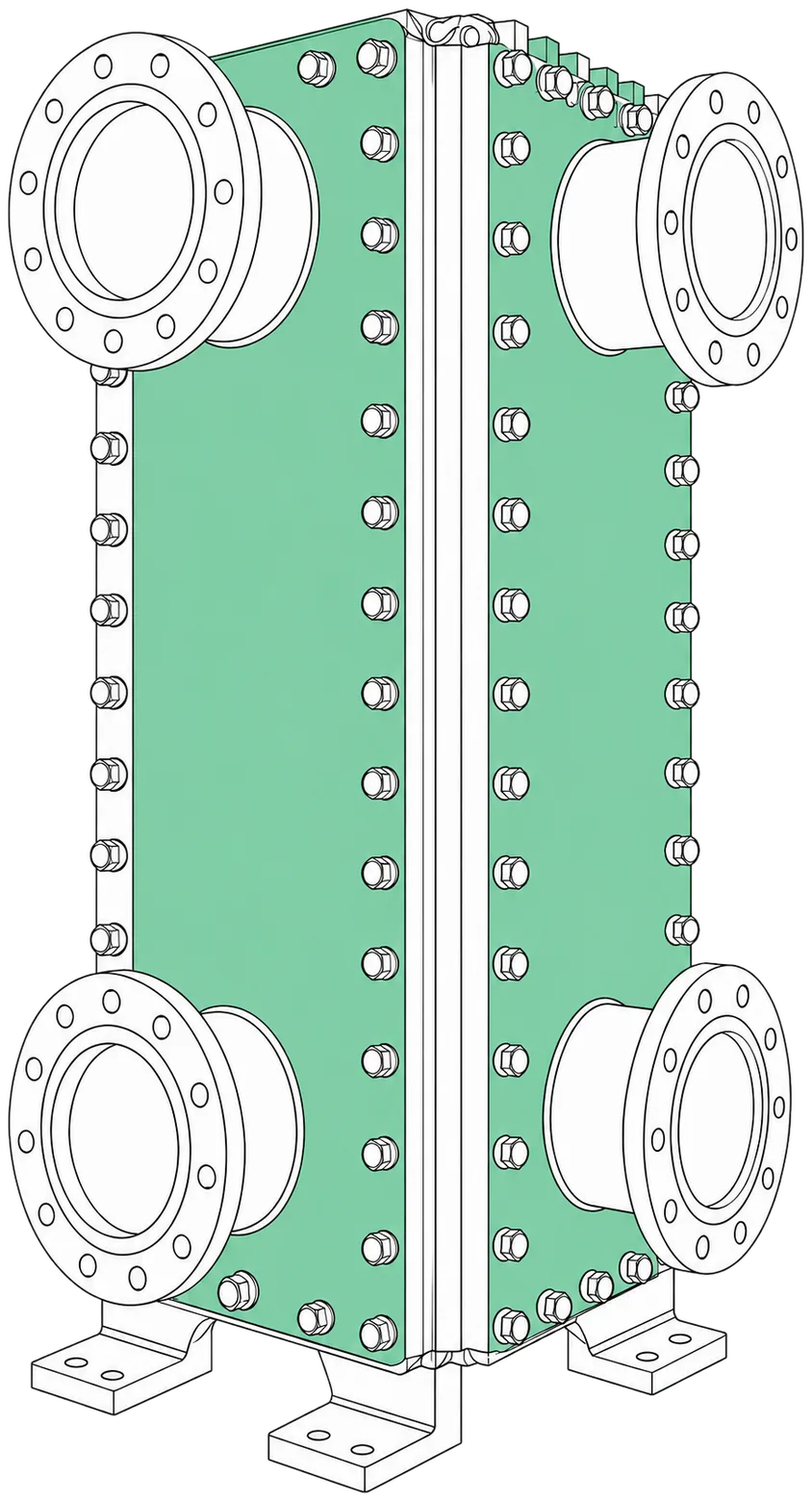
Welded Bloc exchangers are usually specified for a reason: a duty too aggressive, too hot, or too high-pressure for standard equipment. That means the design work upfront carries more weight than it would for a routine plate exchanger.

Our engineering team designs these units for exactly those edge cases — corrosive fluid compatibility across the wetted materials, pressure vessel design considerations, and welded-joint integrity verification — with direct engineering judgment applied wherever software alone isn't sufficient to certify a safety-critical design.

We work closely with fabricators during detailed design to make sure the welded construction is actually achievable at the specified plate thickness and material, not just theoretically correct on paper — a gap that causes real problems if it's discovered after fabrication has already started.

We also support the procurement conversation once design is complete — reviewing fabricator quotes against the specification to confirm what's actually being offered matches what was designed, since welded bloc fabrication quotes can vary significantly in scope and quality between suppliers.

Request a Consultation

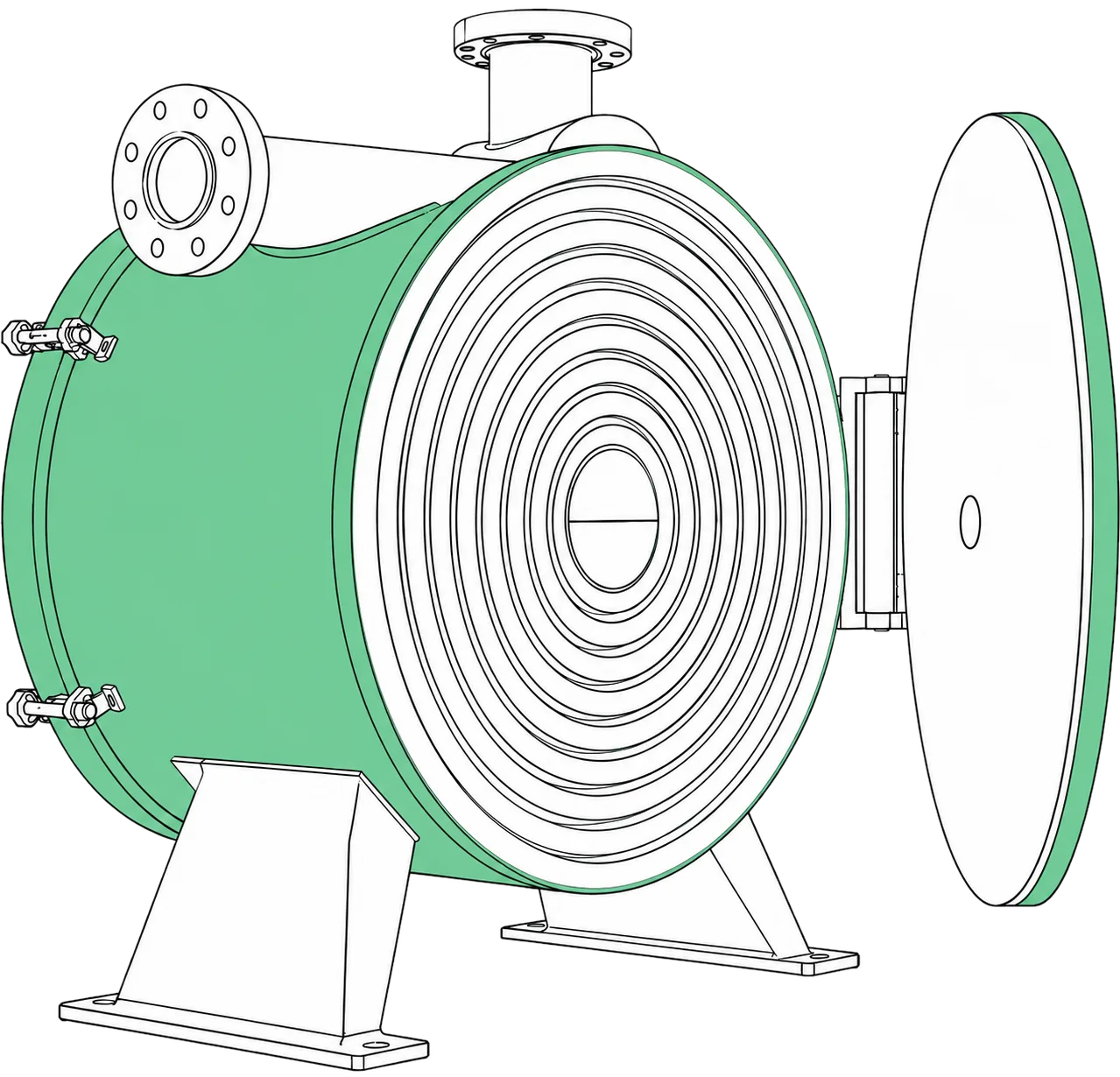
Spiral Heat Exchanger Type 1

Spiral Heat Exchanger Type 1

Spiral Heat Exchangers use a single continuous flow channel wound into a compact spiral — a geometry that’s inherently self-cleaning, since the constant curvature generates centrifugal scrubbing action that keeps the channel clear. That makes Type 1 the natural choice for fouling-prone, viscous, or high-solids-content fluids that would quickly clog a conventional plate or tube unit — slurries, sludges, and process streams with suspended solids that other exchanger types struggle to handle without frequent cleaning shutdowns.

Because the flow path is a single channel rather than multiple parallel passages, there’s no risk of flow maldistribution — every bit of fluid takes the same path, which keeps performance predictable even as the fluid’s condition varies. Our engineers design around that same principle: characterizing your fluid’s actual fouling mechanism and sizing for realistic long-term performance, not clean-condition theoretical output.

This is one of the areas where hands-on experience matters most — a spiral unit sized correctly on paper can still underperform if the fluid’s actual fouling behavior wasn’t properly characterized upfront. We draw on the same spiral-flow fundamentals behind our software, with the field judgment to confirm the geometry will actually deliver the self-cleaning action the fluid needs before committing to a design.

For particularly difficult fluids, we sometimes recommend a pilot-scale trial or a site visit to characterize actual fouling behavior before finalizing a design — a step that costs a little upfront time but avoids a far more expensive redesign after a full-scale unit underperforms.

Request a Consultation

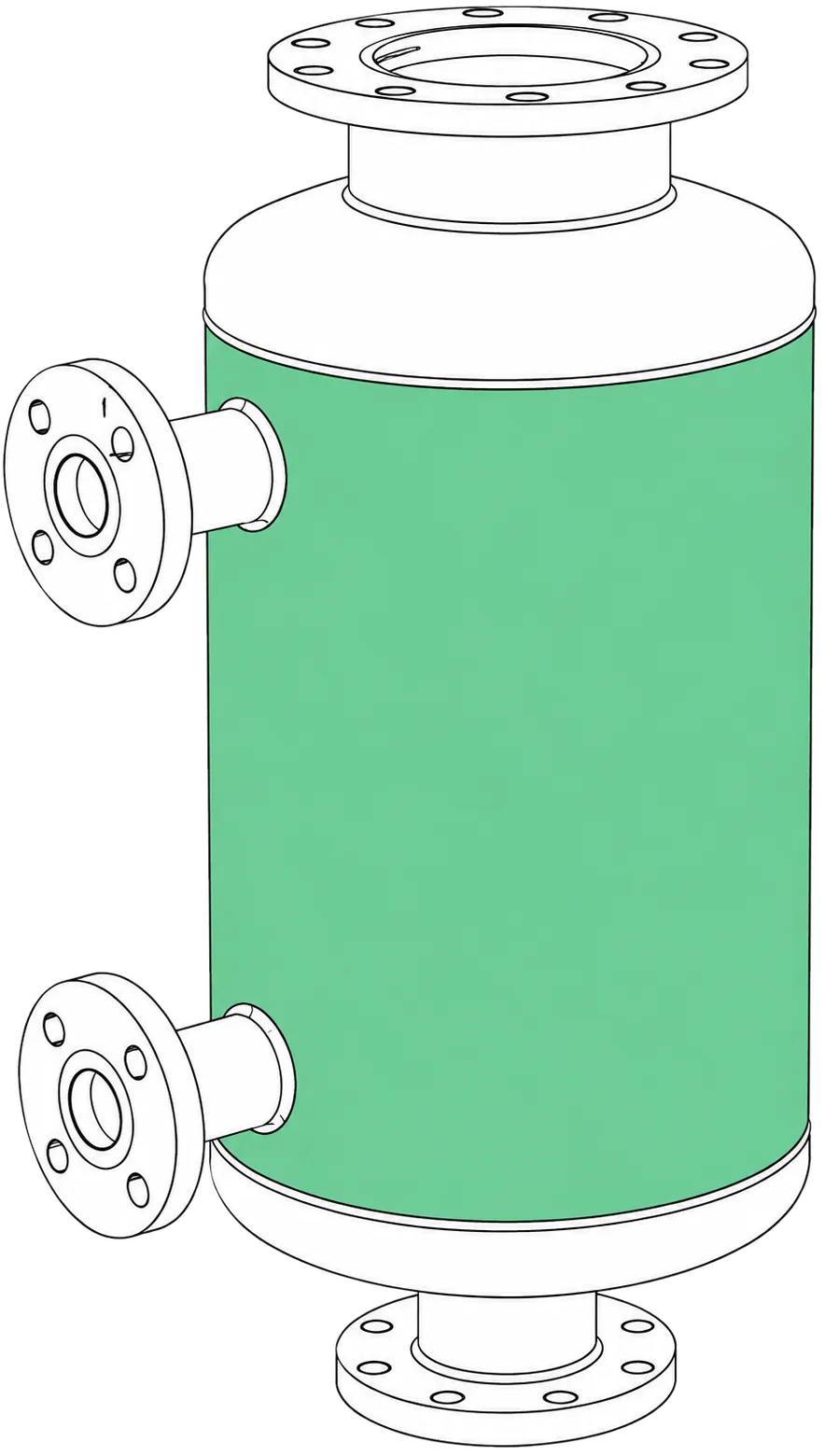
Spiral Heat Exchanger Type 2

Spiral Heat Exchanger Type 2

Type 2 spiral configurations extend the same self-cleaning geometry to condensing and evaporating duties — phase-change service where a fluid changes state as it passes through the unit. The spiral’s continuous channel and induced turbulence help manage the changing flow characteristics that come with condensation or evaporation, in a footprint far smaller than a comparable shell and tube unit would need.

This makes Type 2 a strong fit for condenser and reboiler-type duties involving fouling or viscous fluids — combining the phase-change handling of specialized process equipment with the fouling resistance that makes spiral geometry valuable in the first place. Where Type 1 is chosen mainly for difficult fluids, Type 2 is chosen for difficult fluids and a phase change happening at the same time.

Our engineers design Type 2 units around both demands together: confirming the spiral geometry can handle the changing flow characteristics of condensation or evaporation, while still delivering the self-cleaning action the fluid’s fouling tendency requires — two constraints that have to be satisfied simultaneously, not traded off against each other.

This is where configuration choice matters most — Type 1 and Type 2 aren’t interchangeable, and defaulting to the wrong one because it was used on a similar-sounding project before is a common source of underperformance. For duties with unusual condensing or evaporating behavior, we assess your actual process data — and sometimes recommend a smaller trial — before finalizing a design, confirming the configuration will perform as expected before committing to full-scale fabrication.

Request a Consultation

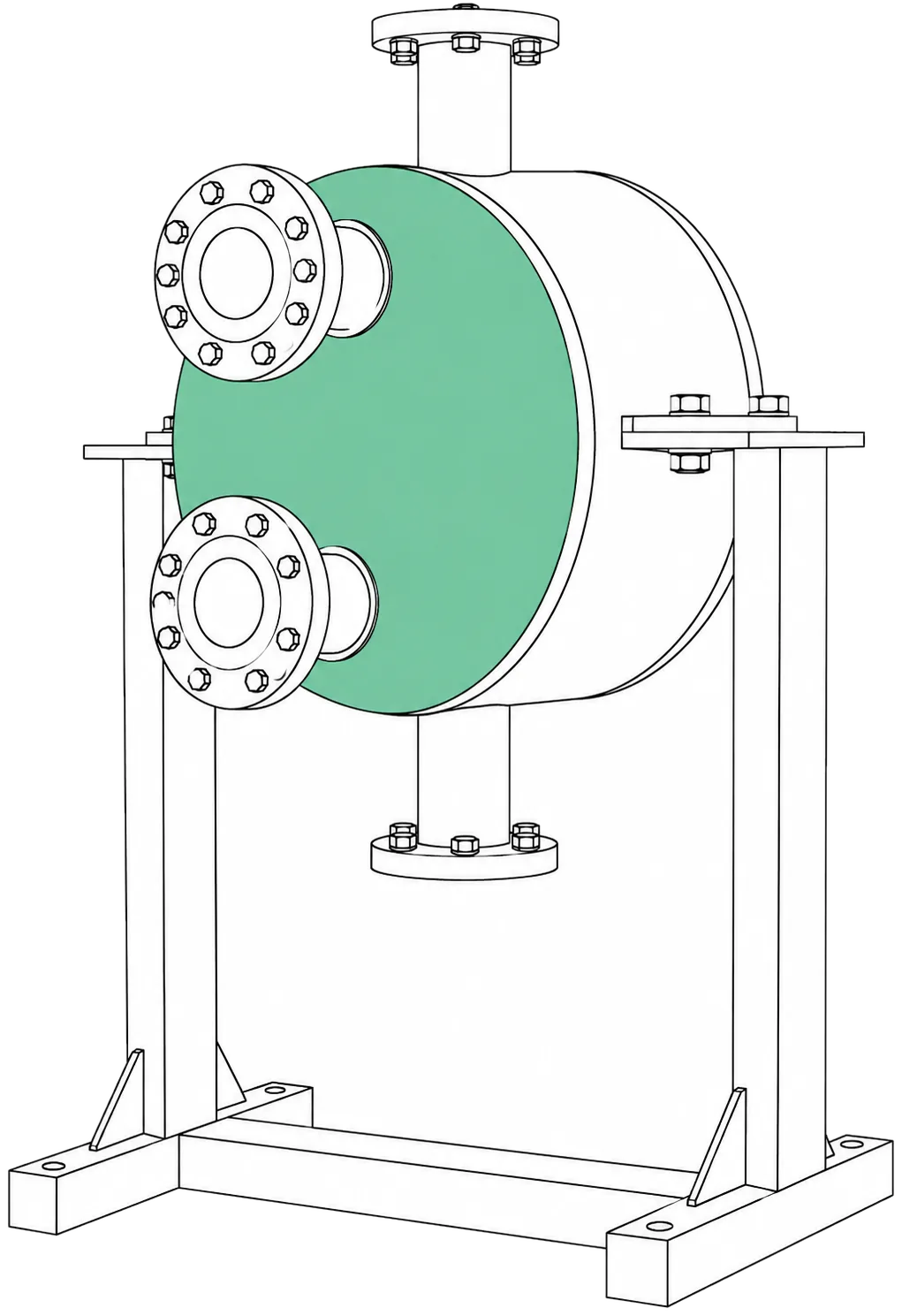
Plate and Shell Heat Exchanger

Plate and Shell Heat Exchanger

Plate and Shell units are usually specified for high-pressure or high-temperature duties beyond what standard plate exchangers can handle — often replacing a shell-and-tube unit where footprint or thermal efficiency has become a genuine constraint.

Our engineers design these hybrid units end-to-end: plate-side thermal performance and shell-side pressure containment together, verified against the applicable pressure vessel code for your jurisdiction, not just the thermal duty in isolation.

Because plate and shell design sits at the intersection of two different engineering disciplines, this is one of the areas where a design tool alone tends to fall short — we bring both the thermal and mechanical engineering judgment needed to get a hybrid design right the first time.

Because plate and shell fabrication capability is genuinely limited to a handful of specialized manufacturers, part of our engineering scope often includes helping identify which fabricators can actually build to the design as specified.

Request a Consultation

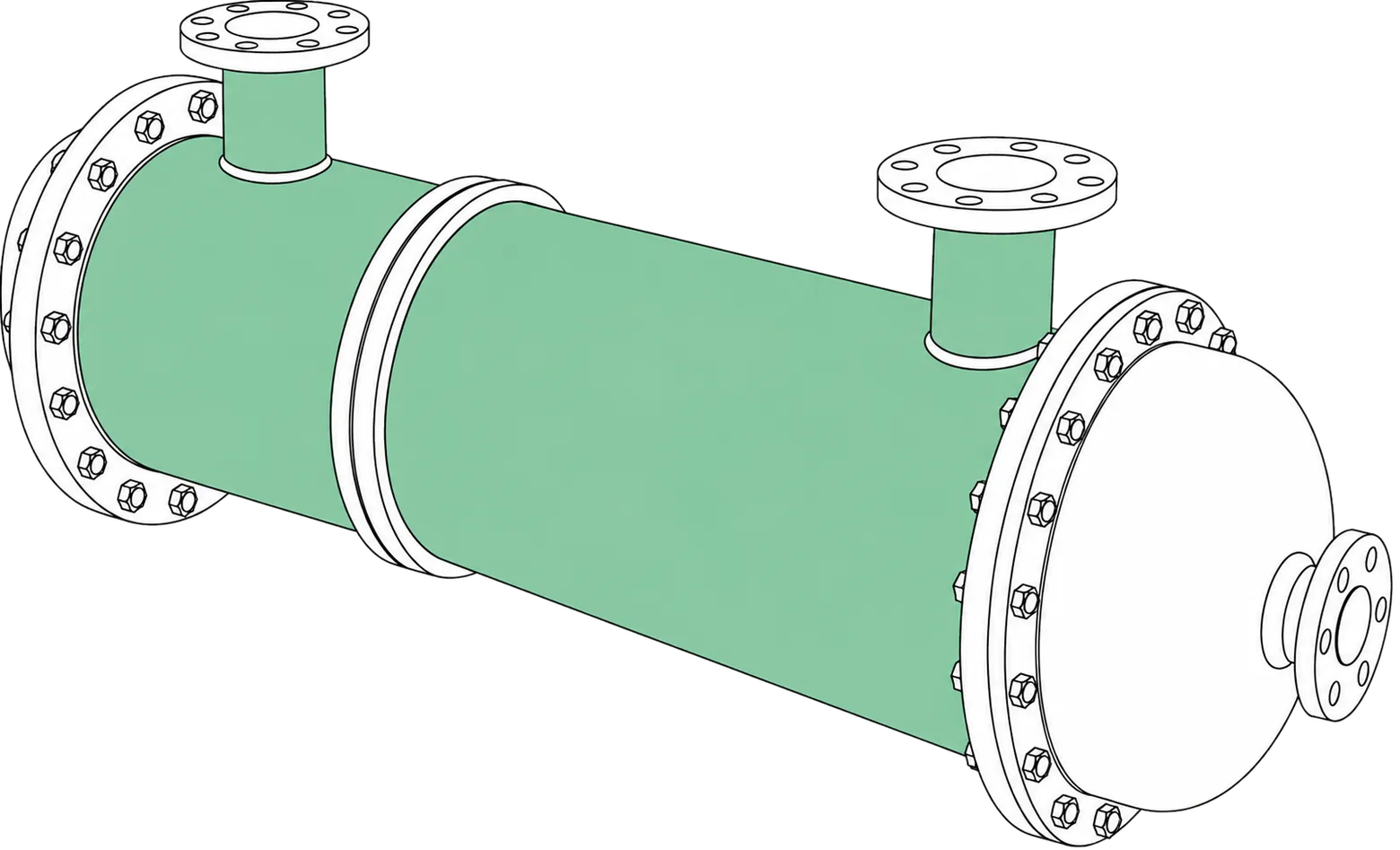
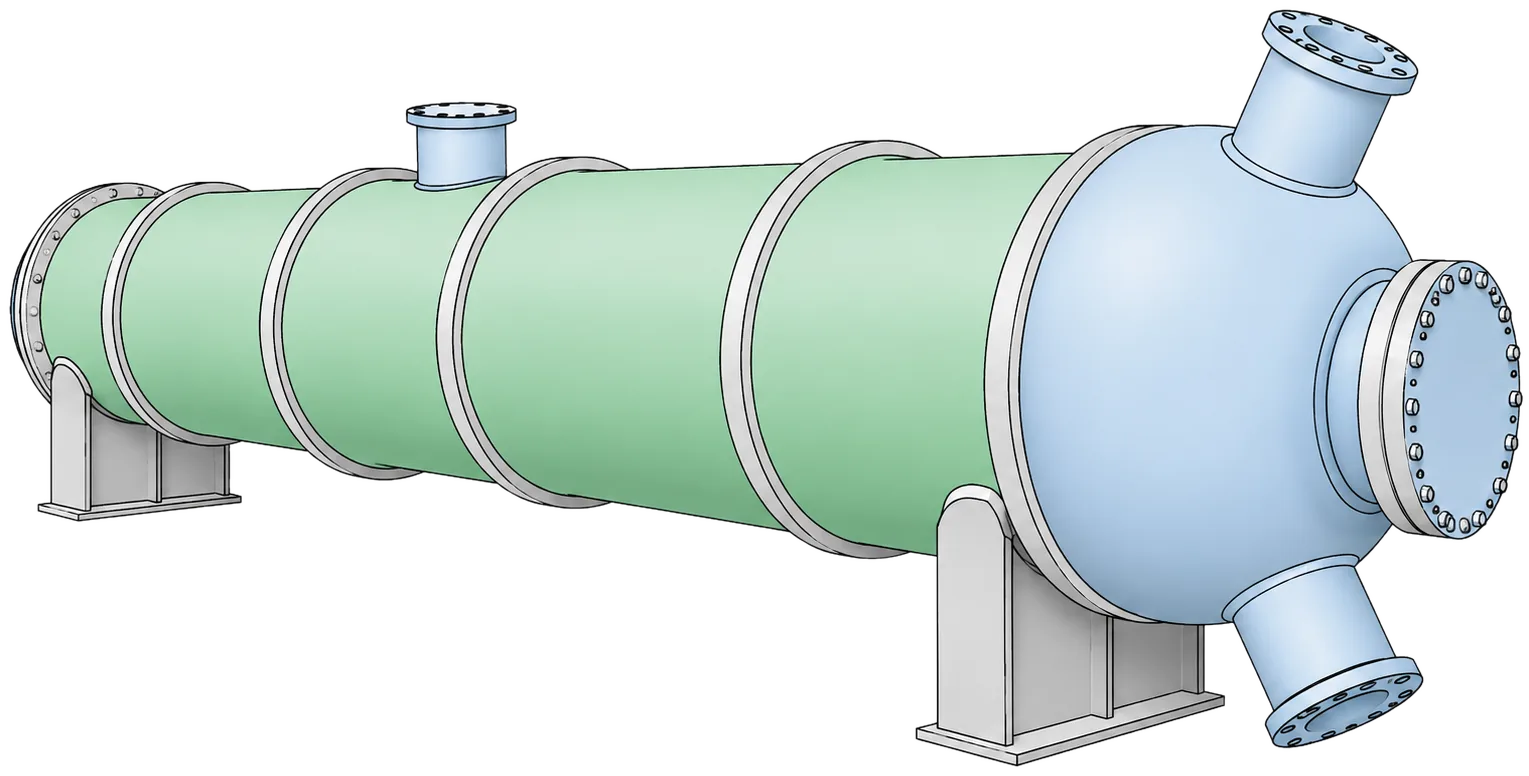
Shell and Tube Heat Exchanger

Shell and Tube Heat Exchanger

Shell and Tube exchangers cover an enormous range of duties, and getting the configuration right — tube layout, baffle design, materials of construction — takes real engineering judgment, especially for non-standard or severe services.

Our engineers design and troubleshoot these units directly: new designs for unusual fluid combinations or space-constrained layouts, and diagnostic work on existing units suffering from vibration, fouling, or underperformance that a generic inspection hasn't been able to explain.

We apply the same TEMA-standard rigor as our software, but with the judgment to handle the cases software alone can't — vibration analysis for high-velocity shell-side flow, tube layout optimization for unusual nozzle placement, and root-cause diagnosis when an existing unit simply isn't performing as designed.

For vibration-sensitive designs — high shell-side velocities, long unsupported tube spans — we run dedicated vibration analysis beyond standard TEMA checks, since tube vibration failure is one of the more common and expensive shell-and-tube problems that standard sizing alone doesn't catch.

Request a Consultation

Waste Heat Recovery Boiler

Waste Heat Recovery Boiler

Sizing a Waste Heat Recovery Boiler well means understanding your specific waste heat source in real detail — flow variability across operating conditions, contaminant carryover, and turndown behavior when the upstream process changes load.

Our engineers design WHRB systems around your actual process conditions, going well beyond a standard sizing run when the source stream is complex, variable, or poorly characterized — which, in practice, describes most real waste heat sources.

This often includes feasibility assessment before any design work begins: is there genuinely enough recoverable heat to justify the capital cost, and at what payback period? We'd rather give an honest 'not worth it yet' than design a boiler that never earns back its installation cost.

Where the waste heat source is poorly documented — which is common, since waste streams are rarely instrumented as carefully as main process flows — we can arrange field measurement to characterize the actual heat available before committing to a design.

Request a Consultation

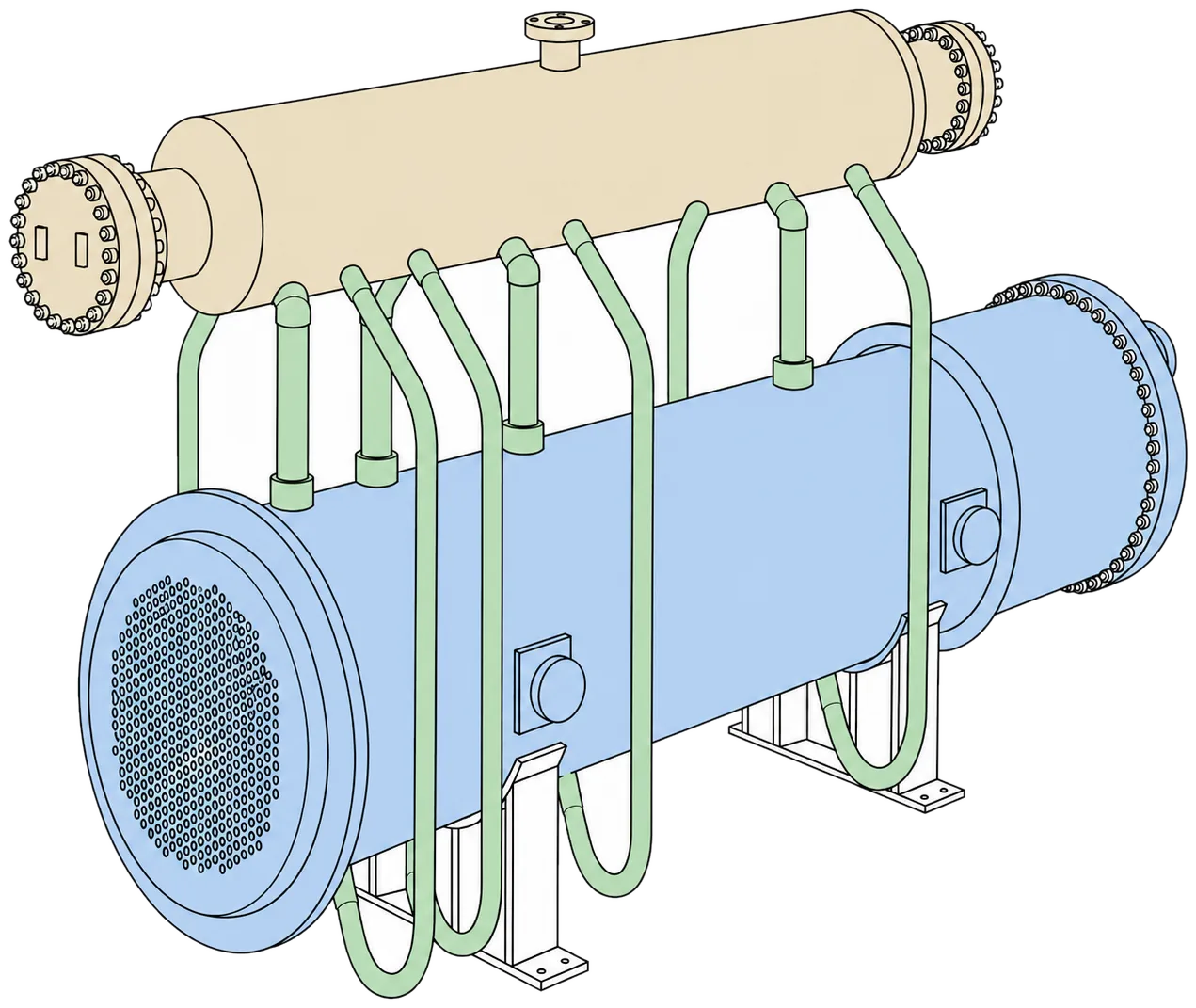
Feed Water Heater

Feed Water Heater

Feed Water Heater design involves more than a simple duty calculation — condensing zone sizing, drain cooling performance, and integration with the broader power cycle all affect whether the unit delivers its expected efficiency gain in practice.

Our engineers handle this level of detail directly: new installation design for plants adding feedwater heating capacity, and troubleshooting for units that are installed but underdelivering on the efficiency improvement they were specified to provide.

Because feedwater heater performance is easy to measure against expectation — the plant's overall heat rate either improves as predicted or it doesn't — this is an area where engineering accountability matters. We stand behind the design numbers we produce, not just the calculation methodology behind them.

We also review integration with the broader steam cycle — extraction pressure, drain routing, and cascading drain arrangements to other heaters in the train — since a feedwater heater rarely performs as an isolated piece of equipment.

Request a Consultation

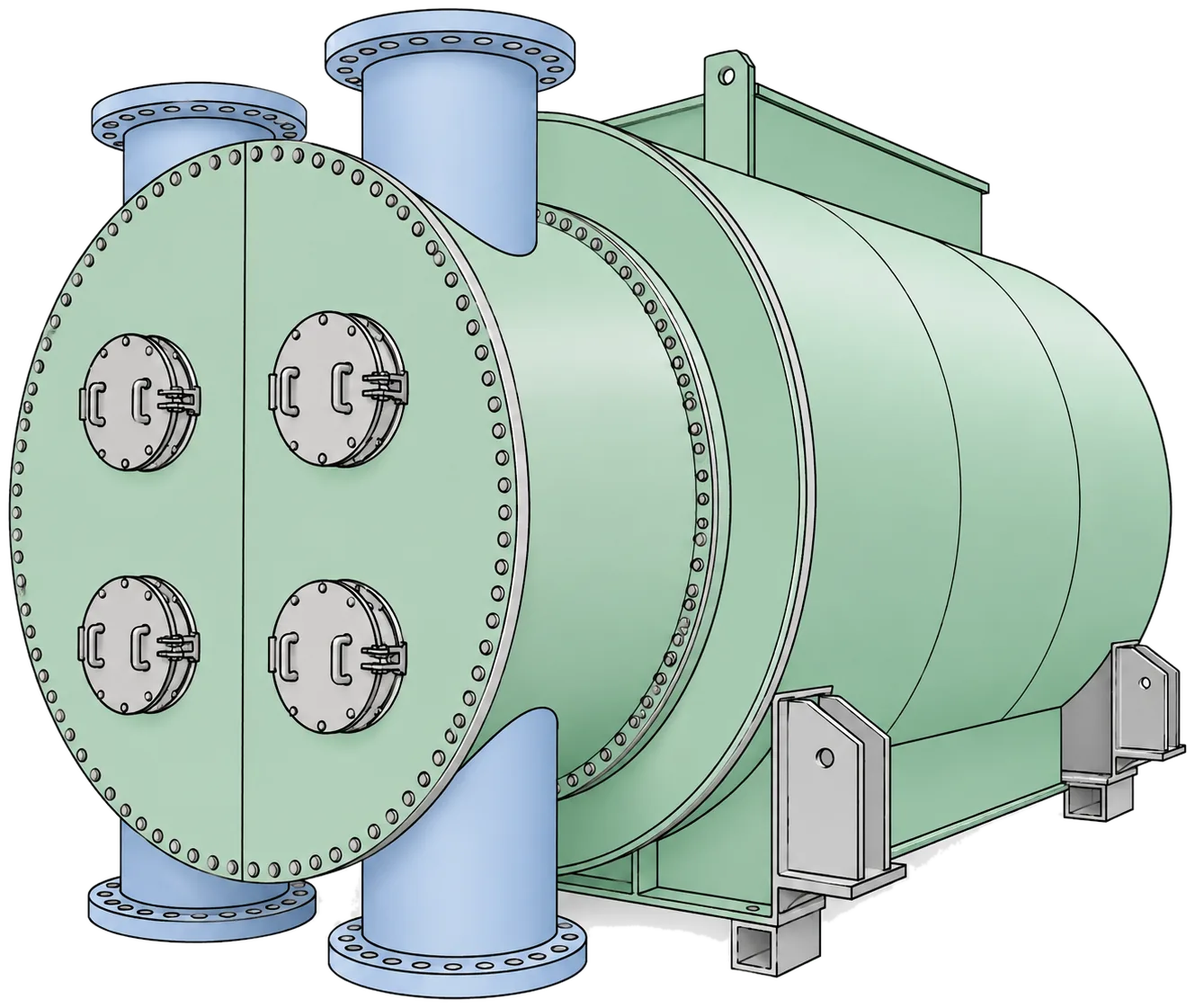
Surface Condenser

Surface Condenser

Surface Condenser performance has an outsized effect on overall plant efficiency, which makes both new design and troubleshooting here especially high-stakes — a small vacuum degradation can cost real money across a year of operation.

Our engineers handle both new condenser design for new installations and performance troubleshooting on existing units — vacuum degradation, tube fouling, air in-leakage diagnosis — bringing full plant-level context to the analysis rather than treating the condenser as an isolated piece of equipment.

Because condenser problems often show up as a plant-wide efficiency symptom rather than an obvious local fault, diagnosis usually requires understanding both the thermal design and the operating history — we bring both, rather than handing back a generic inspection checklist.

Troubleshooting engagements typically start with a review of actual operating data against design expectation, since the gap between the two usually points toward the root cause — fouling, air ingress, or genuine undersizing — faster than a fresh inspection alone.

Request a Consultation

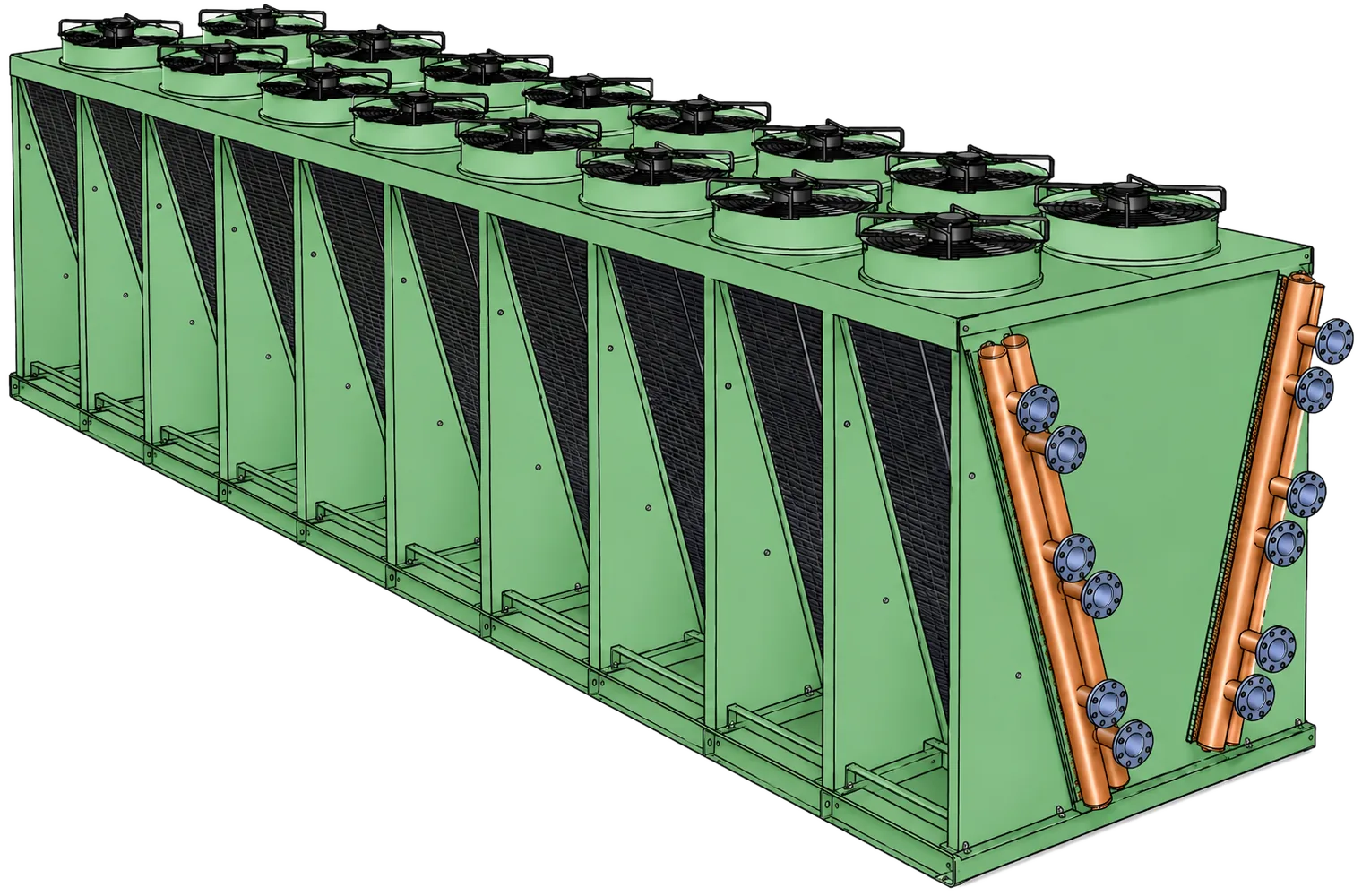
Dry Cooler

Dry Cooler

Dry Coolers need careful sizing around your site's actual ambient conditions and seasonal extremes — oversizing wastes capital on unnecessary fan and coil capacity, while undersizing risks real performance shortfalls exactly when you need the cooling most, on the hottest days of the year.

Our engineers design around your specific site data — actual historical ambient temperature ranges, humidity where relevant, and site-specific factors like recirculation risk from nearby equipment — going beyond a standard design-day calculation whenever local conditions genuinely demand it.

This matters most for sites in climates with wide seasonal swings, where a design based on average conditions can leave a real gap in summer performance. We'd rather size conservatively and explain why than hand over a unit that struggles on the worst days of the year.

For sites with limited historical weather data, we can source and apply regional climate data to build a realistic design basis, rather than relying on a single conservative design-day number that may not reflect actual local conditions.

Request a Consultation

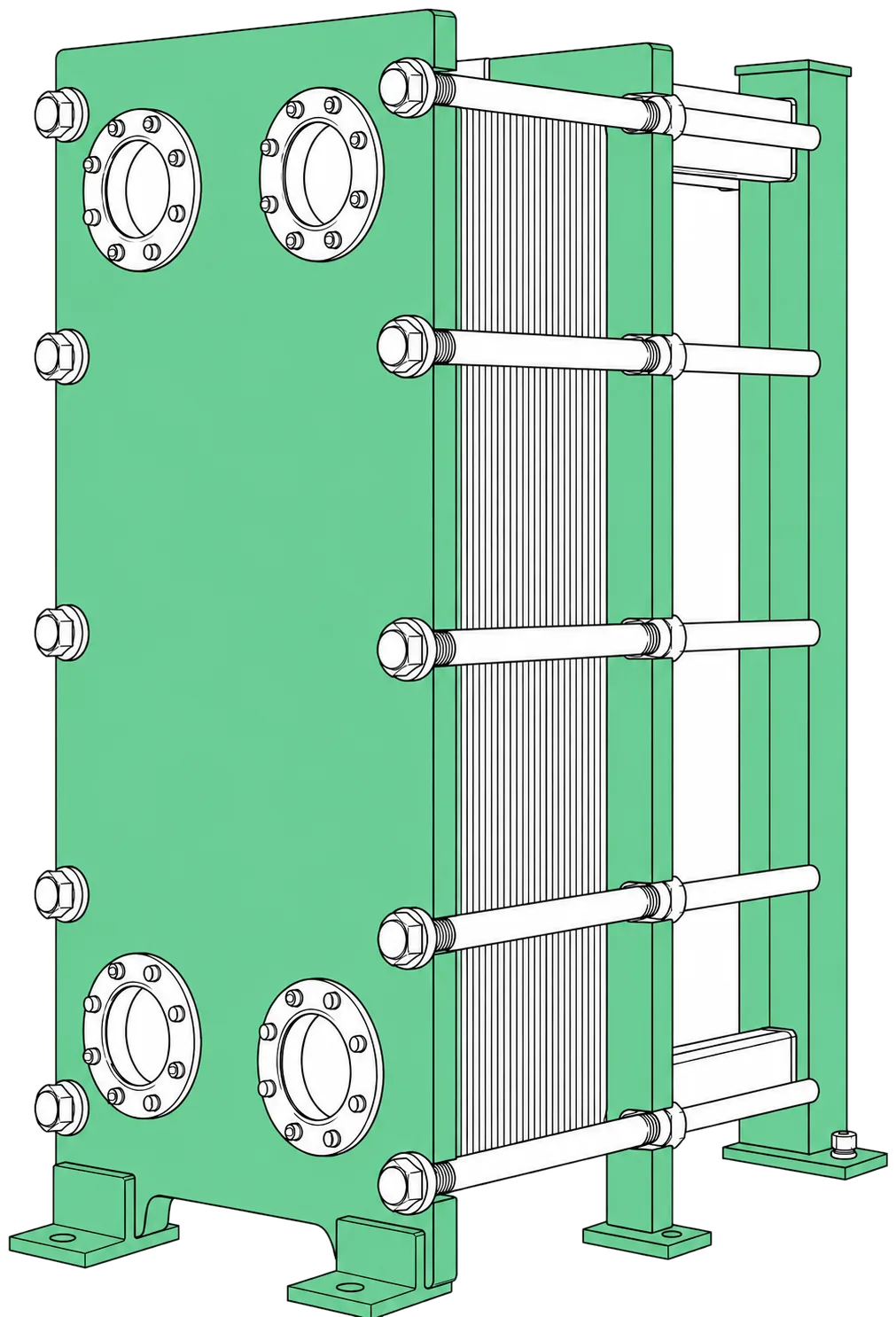
Graphite plate and frame heat exchanger built to a non-standard specification
Graphite Plate and Frame Heat Exchanger
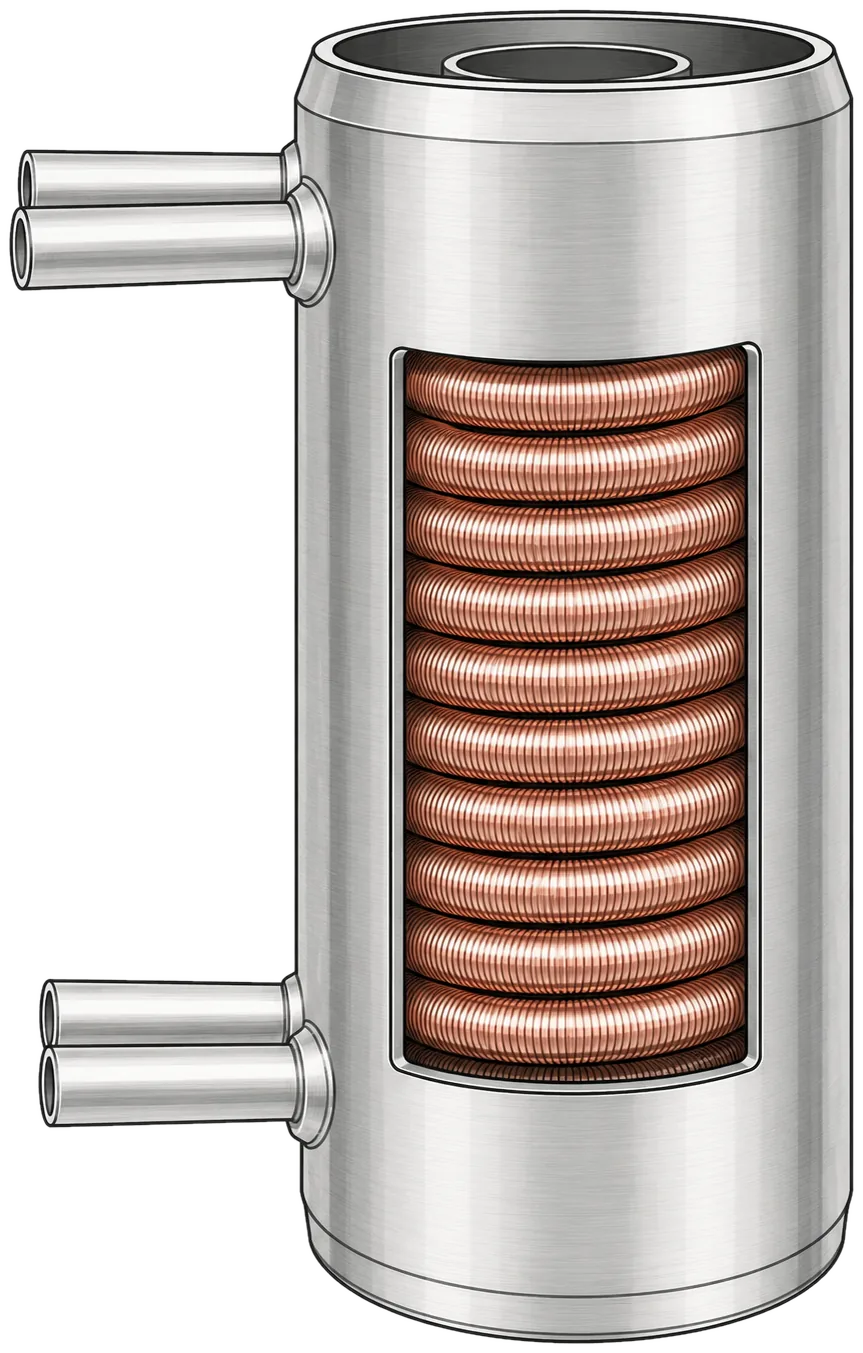
Shell and coil heat exchanger built for a duty outside the standard range
Shell and Coil Heat Exchanger
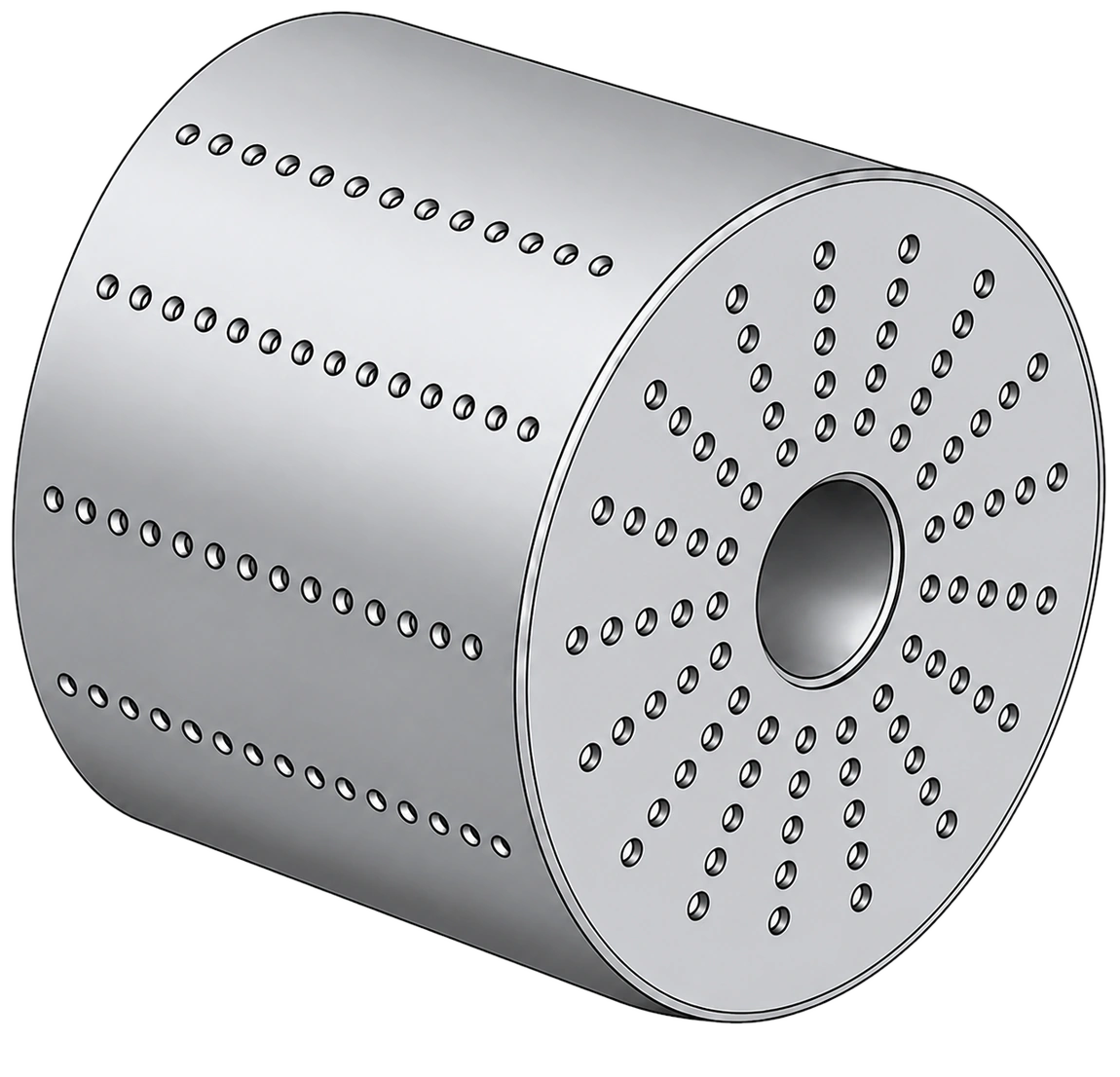
Graphite block heat exchanger for highly corrosive service
Graphite Shell and Tube Heat Exchanger

Custom

The eleven categories above cover most of what a process plant runs. Some duties fit none of them — and those tend to be the ones where getting it wrong is most expensive, because there is no catalogue unit to fall back on.

We design multi-stream units that recover heat between three or more streams in one body, exchangers that boil on one side and condense on the other, graphite and exotic-alloy construction for acid and halide service, cryogenic and supercritical duties where fluid properties move sharply across the unit, non-Newtonian and slurry flows, and exchangers whose geometry is fixed by an existing foundation or headroom limit rather than by the process.

The same applies after commissioning. We rate installed units that have never reached their design duty, establish whether the shortfall is fouling, maldistribution, bypassing, an error in the original sizing or a process that has drifted, and specify what to change — which is often not a new exchanger.

Request a Consultation

Contact Us
sales@nthalpix.com +91 73040 62438 WhatsApp Contact Us